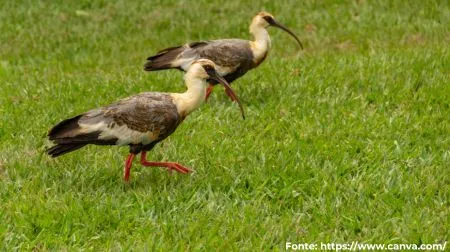
Classificação científicaScientific classification
| Reino:Kingdom: | Animalia |
| Filo:Phylum: | Chordata |
| Classe:Class: | Aves |
| Ordem:Order: | Pelecaniformes |
| Família:Family: | ThreskiornithidaePoche, 1904 |
| Espécie:Species: | T. caudatus |
| Nome científico:Scientific name: | Theristicus caudatus(Boddaert, 1783) |
| Nome em inglês:English name: | Buff-necked Ibis |
CaracterísticasCharacteristics
A curicaca (Theristicus caudatus) mede cerca de 69 cm de comprimento e pode alcançar aproximadamente 143 cm de envergadura. Os machos costumam ser ligeiramente maiores que as fêmeas. Possui corpo de coloração cinza-clara com discretos reflexos esverdeados nas penas do dorso. As asas largas apresentam penas de voo escuras e uma grande mancha esbranquiçada que se destaca durante o voo. Seu longo bico curvado é uma das principais características da espécie, sendo perfeitamente adaptado para explorar o solo em busca de alimento.
The Buff-necked Ibis (Theristicus caudatus) measures about 69 cm (27 in) in length and has a wingspan of approximately 143 cm (56 in). Males are usually slightly larger than females. Its body is mostly light gray with subtle greenish iridescence on the back. The broad wings have dark flight feathers and a conspicuous pale patch that becomes especially noticeable during flight. Its long, downward-curved bill is one of its most distinctive features and is perfectly adapted for probing the ground in search of food.
AlimentaçãoFeeding
A curicaca possui uma dieta bastante variada, alimentando-se principalmente de insetos, larvas, aranhas, centopeias, caramujos e outros invertebrados. Também captura pequenos lagartos, anfíbios, serpentes, roedores e ocasionalmente pequenas aves. Seu longo bico permite alcançar presas escondidas sob a terra fofa ou entre a vegetação. É uma das poucas aves capazes de consumir determinados sapos que liberam toxinas como mecanismo de defesa.
The Buff-necked Ibis has a highly varied diet, feeding mainly on insects, larvae, spiders, centipedes, snails, and other invertebrates. It also captures small lizards, amphibians, snakes, rodents, and occasionally small birds. Its long curved bill allows it to probe soft soil and vegetation in search of hidden prey. It is one of the few birds capable of preying on certain toxic toads that many predators avoid.
ReproduçãoReproduction
Durante a época reprodutiva, constrói grandes ninhos de gravetos sobre árvores ou formações rochosas. A fêmea geralmente coloca dois a quatro ovos, e muitas vezes diversos casais se reproduzem próximos uns dos outros, formando pequenas colônias de nidificação. Os pais dividem os cuidados com os filhotes até que estejam aptos para voar.
During the breeding season, the Buff-necked Ibis builds large stick nests in trees or on rocky outcrops. The female usually lays two to four eggs, and several pairs often nest close together, forming small breeding colonies. Both parents share the responsibility of raising and feeding the chicks until they are ready to fly.
HábitosHabits
Habita campos, pastagens, áreas alagadas, cerrados e ambientes abertos, onde caminha lentamente à procura de alimento. Pode ser observada sozinha, em casais ou em pequenos grupos. Durante o dia percorre grandes áreas alimentando-se e, ao entardecer, costuma reunir-se em árvores para descansar. Seu voo é elegante e frequentemente alterna batidas de asas com longos períodos de planeio. Uma de suas características mais marcantes é a vocalização alta e rouca, facilmente reconhecida mesmo a grandes distâncias.
The Buff-necked Ibis inhabits grasslands, wetlands, pastures, savannas, and other open habitats, where it slowly walks while searching for food. It may be seen alone, in pairs, or in small groups. During the day it forages over large areas and often gathers in trees to roost at dusk. Its flight is graceful, alternating wingbeats with long glides. One of its most distinctive features is its loud, raspy call, which can be heard from great distances.
ReferênciasReferences
Ambiente Brasil - disponível em http://www.ambientebrasil.com.br/composer.php3?base=./especie/fauna/index.html&conteudo=./especie/fauna/aves/caudatus.html Acesso em 12 mai. 2009. Brasil 500 Pássaros - disponível em http://webserver.eln.gov.br/Pass500/BIRDS/1eye.htm Acesso em 12 mai. 2009. http://avibase.bsc-eoc.org/species.jsp?lang=EN&avibaseid=5E393799E1B88D43 https://www.wikiaves.com.br/wiki/curicaca. Acesso em 15/12/2024.