Classificação científicaScientific classification
| Reino:Kingdom: | Animalia |
| Filo:Phylum: | Chordata |
| Classe:Class: | Aves |
| Ordem:Order: | Caprimulgiformes |
| Família:Family: | CaprimulgidaeVigors, 1825 |
| Espécie:Species: | N. albicollis |
| Nome científico:Scientific name: | Nyctidromus albicollis(Gmelin, 1789) |
| Nome em inglês:English name: | Common Pauraque |
CaracterísticasCharacteristics
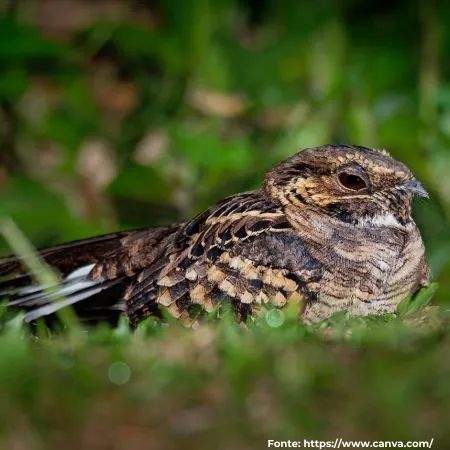
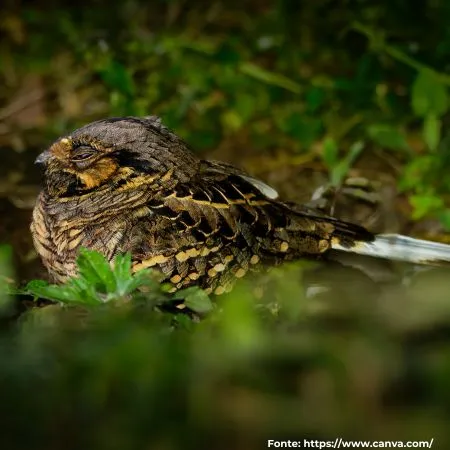
O curiango, também conhecido como bacurau (Nyctidromus albicollis), mede entre 22 e 28 cm de comprimento e pesa aproximadamente 43 a 90 g. Sua plumagem apresenta diferentes tons de marrom, cinza e bege, formando um padrão que imita perfeitamente folhas secas, galhos e o solo da floresta. Essa camuflagem é tão eficiente que a ave pode permanecer praticamente invisível mesmo a poucos metros de distância. Os machos exibem grandes manchas brancas nas asas e nas penas externas da cauda, facilmente observadas durante o voo, enquanto as fêmeas apresentam essas marcas em tons mais discretos, geralmente amarronzados. Possui olhos grandes, bico curto com uma abertura bucal muito ampla e longas asas, características que favorecem a captura de insetos durante voos rápidos ao entardecer e à noite.
The Pauraque (Nyctidromus albicollis) measures 22–28 cm (8.7–11 in) in length and weighs approximately 43–90 g (1.5–3.2 oz). Its plumage combines shades of brown, gray, and buff, creating exceptional camouflage among dry leaves and forest litter. This camouflage is so effective that the bird can remain almost invisible even from a short distance. Males display bold white patches on the wings and outer tail feathers, clearly visible in flight, while females show more subdued buff-colored markings. Large eyes, a short bill with an exceptionally wide mouth, and long wings make this species perfectly adapted for catching flying insects at dusk and during the night.
AlimentaçãoFeeding
Alimenta-se quase exclusivamente de insetos capturados em pleno voo. Sua dieta inclui besouros, mariposas, borboletas, formigas aladas, vespas, abelhas e diversos outros insetos voadores. Costuma caçar próximo ao solo ou partindo rapidamente de um poleiro, realizando voos curtos e extremamente ágeis. Por abrir amplamente o bico durante a caça, recebeu em diversas regiões o apelido popular de "engole-vento".
The Pauraque feeds almost entirely on flying insects caught in midair. Its diet includes beetles, moths, butterflies, winged ants, wasps, bees, and many other flying insects. It often launches from the ground or from low perches, making short, agile flights to intercept its prey. Because it hunts with its mouth held wide open, it is popularly known in some regions as the "wind swallower."
ReproduçãoReproduction
O curiango não constrói um ninho elaborado. A fêmea deposita normalmente um ou dois ovos diretamente sobre o solo, em uma pequena depressão entre folhas secas, onde a camuflagem oferece proteção natural. A incubação dura cerca de 19 dias e é compartilhada pelo casal, embora a fêmea permaneça mais tempo sobre os ovos. Quando algum predador se aproxima, os adultos realizam um comportamento impressionante: fingem estar feridos, afastando o invasor do local onde estão os ovos ou os filhotes.
The Pauraque does not build a conventional nest. Instead, the female usually lays one or two eggs directly on the ground in a shallow depression among leaf litter, where camouflage provides natural protection. Incubation lasts about 19 days and is shared by both parents, although the female spends more time incubating. When predators approach, the adults perform an impressive distraction display by pretending to be injured, drawing the threat away from the eggs or chicks.
HábitosHabits
Habita bordas de florestas, cerrados, capoeiras, campos com árvores isoladas e áreas em regeneração. Durante o dia permanece imóvel sobre o solo, confiando totalmente em sua camuflagem para passar despercebido. Quando surpreendido, levanta voo por uma curta distância e rapidamente volta a pousar entre a vegetação. É uma espécie predominantemente noturna, iniciando suas atividades ao entardecer, quando percorre áreas abertas em busca de insetos. Infelizmente, muitos indivíduos são atropelados em estradas, pois costumam repousar sobre caminhos e vias aquecidas durante a noite.
The Pauraque inhabits forest edges, savannas, secondary forests, open woodlands, and regenerating habitats. During the day it remains motionless on the ground, relying entirely on its remarkable camouflage to avoid detection. If disturbed, it flies only a short distance before landing again among the vegetation. It is primarily nocturnal, becoming active at dusk while searching open areas for flying insects. Unfortunately, many individuals are killed on roads because they often rest on warm surfaces at night.
ReferênciasReferences
Portal Brasil 500 Pássaros, Bacurau - Disponível em http://webserver.eln.gov.br/Pass500/BIRDS/1birds/p141.htm Acesso em 07 mai. 2009. Guilherme, E. & Lima, J. 2020. Breeding biology and morphometrics of Common Pauraque Nyctidromus a. albicollis in south-west Amazonia, and the species' breeding season and clutch size in Brazil. Bulletin of the British Ornithologists Club 140: 344-350. Disponível em https://bioone.org/journals/bulletin-of-the-british-ornithologists-club/volume-140/issue-3/bboc.v140i3.2020.a7/Breeding-biology-and-morphometrics-of-Common-Pauraque-Nyctidromus-a-albicollis/10.25226/bboc.v140i3.2020.a7.full. Hermes Ribeiro Luz; Ildemar Ferreira; Pedro Ernesto Correia Ventura & Carlos Eduardo Lustosa Esbérard - Aspectos da biologia reprodutiva do Bacurau Nyctidromus albicollis (Gmelin, 1789) (Aves, Caprimulgidae) em Seropédica, Rio de Janeiro, Brasil (2011). Revista Brasileira de Zoociências 13 (1, 2, 3): 127-134. Lima, J. M., Guimarães, D. P. & Guilherme, E. 2019. Notes on bird breeding activity in a lowland forest in south-west Brazilian Amazonia. Bulletin of the British Ornithologists Club 139: 338-345. Disponível em https://bioone.org/journals/bulletin-of-the-british-ornithologists-club/volume-139/issue-4/bboc.v139i4.2019.a7/Notes-on-bird-breeding-activity-in-a-lowland-forest-in/10.25226/bboc.v139i4.2019.a7.full. Cleere, N. (1999). Pauraque (Nyctidromus albicollis). In: del Hoyo, J., Elliott, A., Sargatal, J., Christie, D.A. & de Juana, E. (eds.) (2014). Handbook of the Birds of the World Alive. Lynx Edicions, Barcelona. https://www.wikiaves.com.br/wiki/bacurau. Acesso em 16/12/2024.