Classificação científicaScientific classification
| Reino:Kingdom: | Animalia |
| Filo:Phylum: | Chordata |
| Classe:Class: | Aves |
| Ordem:Order: | Strigiformes |
| Família:Family: | StrigidaeLeach, 1820 |
| Espécie:Species: | M. choliba |
| Nome científico:Scientific name: | Megascops choliba(Vieillot, 1817) |
| Nome em inglês:English name: | Tropical Screech-Owl |
CaracterísticasCharacteristics
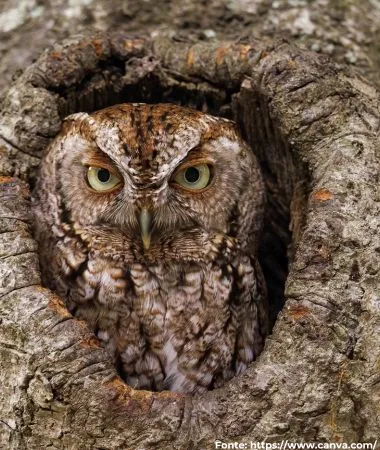
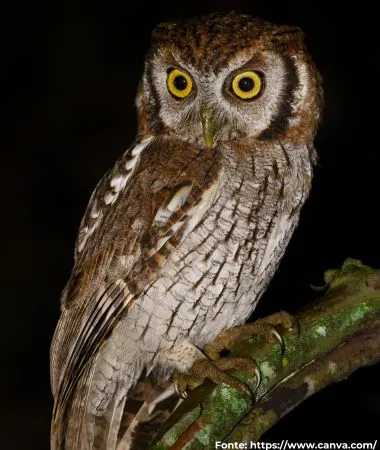
A corujinha-do-mato (Megascops choliba) é uma pequena coruja que mede entre 18 e 30 cm de comprimento e pesa aproximadamente 80 a 196 g. Sua principal característica são os dois pequenos penachos na cabeça, conhecidos popularmente como "orelhas", embora não façam parte do sistema auditivo. Os olhos amarelos destacam-se na face acinzentada, contornada por um disco facial escuro que ajuda a direcionar os sons até os ouvidos. A plumagem apresenta tons de cinza ou castanho-avermelhado, funcionando como uma excelente camuflagem nos troncos das árvores. Os filhotes são mais claros e ainda não possuem os penachos totalmente desenvolvidos. Seu voo é extremamente silencioso, permitindo que se aproxime das presas sem ser percebida.
The Tropical Screech-Owl (Megascops choliba) is a small owl measuring 18–30 cm (7–12 in) in length and weighing about 80–196 g (2.8–6.9 oz). Its most recognizable feature is the pair of feather tufts on its head, often mistaken for ears but unrelated to hearing. Its bright yellow eyes stand out against a gray facial disk that helps funnel sound toward the ears. The plumage ranges from gray to reddish-brown, providing excellent camouflage against tree bark. Juveniles are paler and lack the fully developed ear tufts. Its flight is exceptionally quiet, allowing it to approach prey almost silently.
AlimentaçãoFeeding
Alimenta-se principalmente de grandes insetos, como gafanhotos, besouros, mariposas, aranhas e escorpiões. Também captura pequenos vertebrados, incluindo camundongos, rãs, morcegos e pequenas aves, geralmente a partir de poleiros de observação. Muitas vezes aproveita a iluminação de postes para capturar insetos atraídos pela luz.
The Tropical Screech-Owl feeds mainly on large insects such as grasshoppers, beetles, moths, spiders, and scorpions. It also hunts small vertebrates, including mice, frogs, bats, and small birds, usually launching from observation perches. It frequently hunts around streetlights, where insects gather at night.
ReproduçãoReproduction
A reprodução ocorre principalmente entre janeiro e julho, embora o período de corte comece alguns meses antes com intensas vocalizações do casal. Nidifica em cavidades naturais de árvores, ocos feitos por pica-paus, cupinzeiros, construções abandonadas e outras cavidades protegidas. A postura geralmente varia entre um e quatro ovos brancos. A incubação é realizada pela fêmea, enquanto o macho protege o território e fornece alimento para ela e, posteriormente, para os filhotes. Quando o ninho é ameaçado, os adultos defendem a área com voos rasantes e vocalizações intensas.
Breeding usually occurs between January and July, although courtship begins earlier with frequent vocal exchanges between the pair. The Tropical Screech-Owl nests in natural tree cavities, abandoned woodpecker holes, termite mounds, abandoned buildings, and other sheltered cavities. The female usually lays one to four white eggs. She performs the incubation while the male defends the territory and provides food for both her and the chicks. If the nest is threatened, the adults actively defend it with swooping flights and loud calls.
HábitosHabits
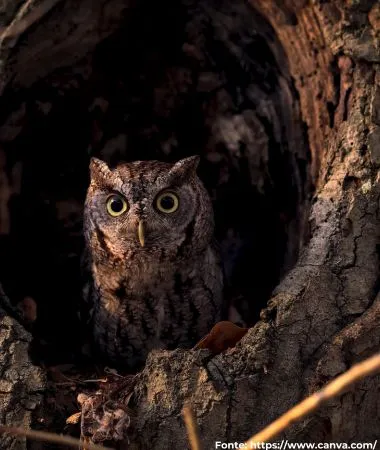
É uma espécie estritamente noturna, encontrada em áreas rurais, parques urbanos, fazendas, capoeiras e bordas de matas, evitando o interior de florestas muito fechadas. Durante o dia permanece escondida em ocos de árvores ou outras cavidades protegidas. Ao anoitecer inicia suas atividades de caça, sendo normalmente percebida primeiro pelo canto do que pela visão. Seu chamado grave e repetitivo lembra o coaxar de um sapo-cururu, característica que ajuda muitos observadores a identificá-la mesmo sem enxergá-la.
The Tropical Screech-Owl is strictly nocturnal and occurs in rural areas, urban parks, farms, secondary forests, and forest edges, generally avoiding dense forests. During the day it remains hidden inside tree cavities or other sheltered places. At night it becomes active and is usually detected by its voice long before it is seen. Its deep, repetitive call resembles the croak of a large toad, making it relatively easy to identify by sound alone.
ReferênciasReferences
Aves de Rapina do Brasil - disponível em http://www.avesderapinabrasil.com/megascops_choliba.htm Acesso em 11 mai.2009. CLEMENTS, J. F., T. S. Schulenberg, M. J. Iliff, D. Roberson, T. A. Fredericks, B. L. Sullivan, and C. L.. The Clements checklist of Birds of the World: Version 6.9; Cornell: Cornell University Press, 2014. The World Bird Database, AVIBASE; http://avibase.bsc-eoc.org/species.jsp?avibaseid=E2B40A6E68F699C4. Handbook of the Birds of the World Alive. Lynx Edicions, Barcelona. ITIS - Integrated Taxonomic Information System (2015); Smithsonian Institution; Washington, DC. SILVA, J., RIBENBOIM, L. C. da C., SANTOS, N. Corujas do Brasil. Taubaté, SP: Dica de Turismo Publicações, 2017. https://www.wikiaves.com.br/