Classificação científicaScientific classification
| Reino:Kingdom: | Animalia |
| Filo:Phylum: | Chordata |
| Classe:Class: | Aves |
| Ordem:Order: | Caprimulgiformes |
| Família:Family: | CaprimulgidaeVigors, 1825 |
| Espécie:Species: | P. nacunda |
| Nome científico:Scientific name: | Podager nacunda(Vieillot, 1817) |
| Nome em inglês:English name: | Nacunda Nighthawk |
CaracterísticasCharacteristics
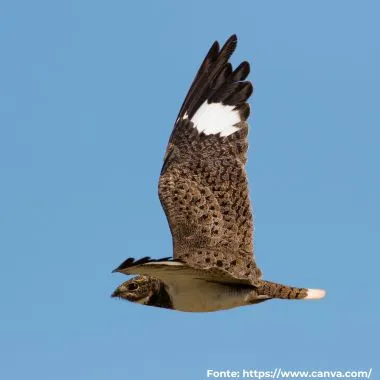
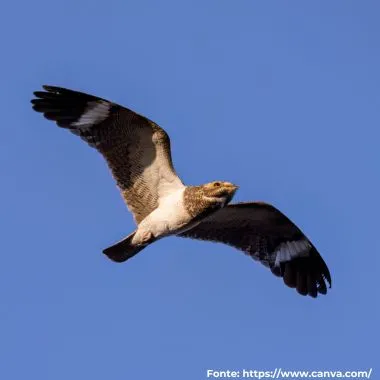
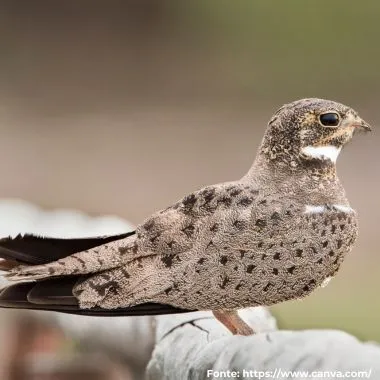
O corucão (Podager nacunda) é o maior representante dos bacuraus, podendo alcançar 29,5 cm de comprimento e cerca de 71 cm de envergadura. Sua plumagem marrom-acinzentada apresenta um elaborado padrão de manchas que se confunde perfeitamente com o solo seco e a vegetação rasteira. A garganta, parte do ventre e regiões das asas possuem áreas brancas que permanecem pouco visíveis quando a ave está pousada, mas tornam-se bastante evidentes durante o voo. Nos machos, a ponta da cauda também apresenta manchas brancas bem destacadas. Essa extraordinária camuflagem permite que permaneça imóvel durante o dia sem ser facilmente percebido.
The Nacunda Nighthawk (Podager nacunda) is the largest member of the nighthawk family, reaching 29.5 cm (11.6 in) in length with a wingspan of about 71 cm (28 in). Its grayish-brown plumage is intricately patterned, providing exceptional camouflage against dry ground and grasslands. The throat, belly, and parts of the wings are white but remain mostly hidden while the bird is resting. In flight, however, these white patches become highly conspicuous, and males also display prominent white markings on the tail. This remarkable camouflage allows the bird to remain motionless and almost invisible during daylight hours.
AlimentaçãoFeeding
Alimenta-se principalmente de insetos capturados em pleno voo. Ao entardecer, realiza voos longos e ágeis para capturar mariposas, besouros e outros insetos. Também costuma aproveitar queimadas naturais ou controladas, capturando os insetos que fogem das chamas. Em áreas urbanas e rurais, é frequentemente visto voando ao redor de postes e lâmpadas, onde encontra grande concentração de insetos atraídos pela luz.
The Nacunda Nighthawk feeds mainly on flying insects captured in midair. At dusk, it performs long, agile flights to catch moths, beetles, and other insects. It also takes advantage of natural or controlled fires by hunting insects escaping from the flames. In towns and rural areas, it is often seen flying around streetlights, where many insects gather at night.
ReproduçãoReproduction
A reprodução ocorre principalmente entre junho e outubro. Como outros bacuraus, o corucão não constrói um ninho elaborado. A fêmea deposita os ovos diretamente no solo, aproveitando a excelente camuflagem da plumagem para proteger a incubação. Os filhotes também apresentam coloração discreta, permanecendo praticamente invisíveis entre a vegetação.
Breeding takes place mainly between June and October. Like other nighthawks, the Nacunda Nighthawk does not build a conventional nest. Instead, the female lays her eggs directly on the ground, relying on the birds' outstanding camouflage for protection. The chicks are also cryptically colored, blending almost perfectly into their surroundings.
HábitosHabits
Habita campos abertos, áreas alagadas, margens de corixos, baías e regiões com vegetação rasteira. Durante o dia permanece imóvel no solo, onde sua plumagem o torna extremamente difícil de localizar. Ao entardecer inicia intensos voos de caça, realizando mudanças bruscas de direção para capturar insetos em pleno ar. Em determinadas épocas pode ser observado caçando em pequenos grupos, percorrendo repetidamente a mesma área enquanto patrulha o ambiente.
The Nacunda Nighthawk inhabits open grasslands, wetlands, floodplains, and areas with low vegetation. During the day it rests motionless on the ground, where its cryptic plumage makes it extremely difficult to detect. At dusk it becomes highly active, performing swift, agile flights with sudden changes of direction while hunting flying insects. At certain times, several individuals may forage together, repeatedly patrolling the same feeding area.
ReferênciasReferences
CLEMENTS, J. F., T. S. Schulenberg, M. J. Iliff, D. Roberson, T. A. Fredericks, B. L. Sullivan, and C. L.. The Clements checklist of Birds of the World: Version 6.9; Cornell: Cornell University Press, 2014. del Hoyo, J.; et al., (2014). Handbook of the Birds of the World Alive. Lynx Edicions, Barcelona. ITIS - Integrated Taxonomic Information System (2015); Smithsonian Institution; Washington, DC. Piacentini et al. (2015). Annotated checklist of the birds of Brazil by the Brazilian Ornithological Records Committee / Lista comentada das aves do Brasil pelo Comitê Brasileiro de Registros Ornitológicos. Revista Brasileira de Ornitologia, 23(2): 91–298. The World Bird Database, AVIBASE; http://avibase.bsc-eoc.org/species.jsp?avibaseid=6E297C5B629A437E. https://www.wikiaves.com.br/wiki/corucao. Acesso em 16/12/2024.