Classificação científicaScientific classification
| Reino:Kingdom: | Animalia |
| Filo:Phylum: | Chordata |
| Classe:Class: | Aves |
| Ordem:Order: | Psittaciformes |
| Família:Family: | PsittacidaeRafinesque, 1815 |
| Espécie:Species: | M. monachus |
| Nome científico:Scientific name: | Myiopsitta monachus(Boddaert, 1783) |
| Nome em inglês:English name: | Monk Parakeet |
CaracterísticasCharacteristics
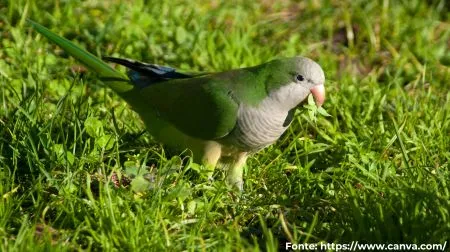
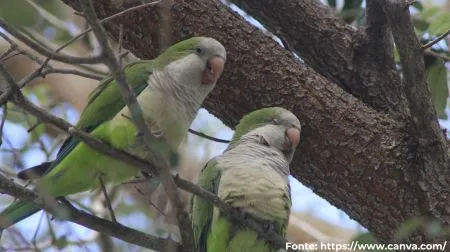
A caturrita (Myiopsitta monachus) mede entre 28 e 33 cm de comprimento e é um dos psitacídeos mais fáceis de reconhecer na América do Sul. Sua plumagem é predominantemente verde, contrastando com a testa, garganta, peito e ventre acinzentados. O bico é curto e alaranjado, enquanto as asas e a longa cauda apresentam tonalidades azuladas que se destacam durante o voo. Machos e fêmeas possuem aparência muito semelhante.
The Monk Parakeet (Myiopsitta monachus) measures 28–33 cm (11–13 in) in length and is one of South America's most recognizable parrots. Its plumage is mostly green, contrasting with the gray forehead, throat, breast, and belly. It has a short orange bill, while its wings and long tail display bluish tones, especially noticeable in flight. Males and females have a very similar appearance.
AlimentaçãoFeeding
Alimenta-se de sementes, frutos, brotos, flores, folhas, verduras e diversos tipos de vegetais. Sua dieta variada permite aproveitar tanto recursos naturais quanto cultivos agrícolas, motivo pelo qual pode causar prejuízos em plantações de milho, sorgo e pomares em algumas regiões. 🇺🇸 English The Monk Parakeet feeds on seeds, fruits, buds, flowers, leaves, and a wide variety of plant material. Its highly adaptable diet allows it to exploit both natural food sources and agricultural crops, making it an agricultural pest in some regions where it feeds on corn, sorghum, and fruit orchards.
The Monk Parakeet feeds on seeds, fruits, buds, flowers, leaves, and a wide variety of plant material. Its highly adaptable diet allows it to exploit both natural food sources and agricultural crops, making it an agricultural pest in some regions where it feeds on corn, sorghum, and fruit orchards.
ReproduçãoReproduction
A reprodução ocorre principalmente entre julho e dezembro. A caturrita é a única espécie de psitacídeo das Américas que constrói grandes ninhos de gravetos em vez de utilizar cavidades naturais. Esses ninhos podem reunir diversos casais, formando verdadeiros condomínios comunitários que chegam a ultrapassar um metro de diâmetro e pesar cerca de 200 kg. Essas estruturas permanecem ativas durante todo o ano, servindo tanto para a reprodução quanto como abrigo durante tempestades e noites frias.
Breeding takes place mainly between July and December. The Monk Parakeet is unique among American parrots because it builds large stick nests instead of nesting in natural cavities. Several pairs may share the same structure, creating communal nests that can exceed one meter (3 ft) in diameter and weigh around 200 kg (440 lb). These impressive nests are used year-round for breeding, shelter, and protection from storms and cold nights.
HábitosHabits
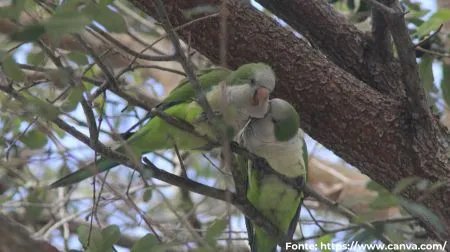
Habita áreas abertas, florestas de galeria, plantações, parques e ambientes urbanos, adaptando-se facilmente à presença humana. É uma ave extremamente sociável, vivendo em casais ou grandes bandos que podem reunir dezenas ou até centenas de indivíduos. Costuma deslocar-se em grupos ruidosos, mantendo intensa comunicação por meio de vocalizações constantes. Em regiões agrícolas, sua população pode crescer rapidamente quando há abundância de alimento e poucos predadores naturais. Já no Pantanal, o equilíbrio ecológico costuma manter suas populações em níveis naturais.
The Monk Parakeet inhabits open woodlands, gallery forests, farmland, parks, and urban environments, adapting exceptionally well to human presence. It is highly social, living in pairs or noisy flocks that may include dozens or even hundreds of birds. Constant vocal communication helps maintain cohesion within the group. In agricultural regions with abundant food and few predators, populations may increase rapidly. In the Pantanal, however, natural predators help keep their numbers in ecological balance.
ReferênciasReferences
CLEMENTS, J. F., T. S. Schulenberg, M. J. Iliff, D. Roberson, T. A. Fredericks, B. L. Sullivan, and C. L.. The Clements checklist of Birds of the World: Version 6.9; Cornell: Cornell University Press, 2014. del Hoyo, J.; et al., (2014). Handbook of the Birds of the World Alive. Lynx Edicions, Barcelona. ITIS - Integrated Taxonomic Information System (2015); Smithsonian Institution; Washington, DC. Juniper, T., & M. Parr. (1998) - Parrots: A Guide to Parrots of the World. Yale University Press, New Haven, Ct, USA. The World Bird Database, AVIBASE; http://avibase.bsc-eoc.org/species.jsp?avibaseid=35810386DDA72E08 https://www.wikiaves.com.br/wiki/caturrita. Acesso em 16/12/2024.