Classificação científicaScientific classification
| Reino:Kingdom: | Animalia |
| Filo:Phylum: | Chordata |
| Classe:Class: | Aves |
| Ordem:Order: | Gruiformes |
| Família:Family: | AramidaeBonaparte, 1852 |
| Espécie:Species: | A. guarauna |
| Nome científico:Scientific name: | Aramus guarauna(Linnaeus, 1766) |
| Nome em inglês:English name: | Limpkin |
CaracterísticasCharacteristics
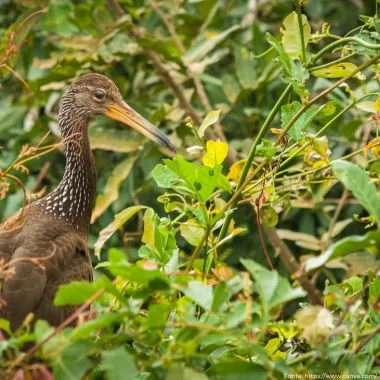
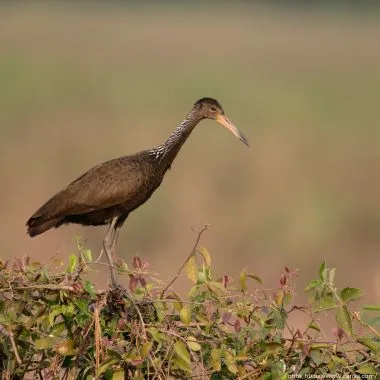
O carão (Aramus guarauna) mede cerca de 70 cm de comprimento e é a única espécie pertencente à família Aramidae, tornando-se uma ave bastante singular entre as aves aquáticas das Américas. Possui plumagem predominantemente marrom-escura com delicadas estrias brancas na cabeça e no pescoço. A garganta é branca, o bico é longo e levemente curvado, com a mandíbula inferior amarelada, e as pernas são negras, adaptadas para caminhar em áreas alagadas. Machos e fêmeas apresentam aparência muito semelhante, não havendo dimorfismo sexual evidente.
The Limpkin (Aramus guarauna) measures about 70 cm (28 in) in length and is the only living member of the family Aramidae, making it one of the most distinctive wetland birds in the Americas. It has dark brown plumage covered with fine white streaks on the head and neck. Its throat is white, the bill is long and slightly curved with a yellowish lower mandible, and its long black legs are well adapted for walking through shallow wetlands. Males and females have very similar plumage, with virtually no visible sexual differences.
AlimentaçãoFeeding
Sua alimentação é altamente especializada, baseada principalmente em grandes caramujos aquáticos, especialmente os conhecidos como aruás. Utiliza o longo bico para retirar o molusco de dentro da concha com grande precisão, uma habilidade desenvolvida especificamente para esse tipo de presa. Também pode consumir caramujos terrestres, pequenos lagartos e outros animais de pequeno porte. Durante a caça, caminha lentamente em águas rasas, sem mergulhar, procurando as presas entre a vegetação aquática.
The Limpkin has a highly specialized diet consisting mainly of large freshwater snails, especially apple snails. Its long bill is specially adapted to extract the snail from its shell with remarkable precision. It may also eat land snails, small lizards, and other small animals. While feeding, it slowly walks through shallow water without diving, searching for prey among aquatic vegetation.
ReproduçãoReproduction
Constrói um grande ninho em forma de cesta sobre a vegetação dos brejos ou entre arbustos próximos à água. A fêmea normalmente coloca três a seis ovos de coloração creme com manchas marrons. Após a eclosão, ambos os pais participam da proteção e dos cuidados com os filhotes.
The Limpkin builds a large basket-shaped nest on marsh vegetation or in shrubs near the water. The female usually lays three to six cream-colored eggs marked with brown spots. After hatching, both parents take part in protecting and caring for the chicks.
HábitosHabits
Habita brejos, pântanos, campos alagados, margens de rios, lagoas e manguezais, sempre associado a ambientes úmidos com abundância de vegetação aquática. Costuma viver sozinho ou aos pares durante a reprodução, embora ocasionalmente possa ser observado em pequenos grupos. Passa boa parte do tempo caminhando lentamente entre a vegetação ou permanecendo imóvel à espera de alimento. Apesar de poder ser visto durante o dia, apresenta maior atividade ao entardecer e à noite. Seu chamado grave e potente é um dos sons mais característicos das áreas alagadas, podendo ser ouvido a grandes distâncias durante a época reprodutiva.
The Limpkin inhabits marshes, swamps, flooded grasslands, riverbanks, lakes, and mangroves, always remaining closely associated with wetlands rich in aquatic vegetation. It is usually solitary or found in pairs during the breeding season, although small groups may occasionally occur. Much of its time is spent slowly walking through marsh vegetation or standing motionless while searching for food. Although active during the day, it is especially active at dusk and during the night. Its deep, haunting calls are among the most distinctive sounds of wetlands and can be heard over long distances during the breeding season.
ReferênciasReferences
Portal Brasil 500 Pássaros, Carão - Disponível em http://webserver.eln.gov.br/Pass500/BIRDS/1birds/p72.htm Acesso em 12 mai. 2009 Wikipédia - disponível em http://pt.wikipedia.org/wiki/Car%C3%A3o CLEMENTS, J. F.; The Clements Checklist of Birds of the World. Cornell: Cornell University Press, 2005. https://www.wikiaves.com.br/wiki/carao. Acesso em 15/12/2024.