Classificação científicaScientific classification
| Reino:Kingdom: | Animalia |
| Filo:Phylum: | Chordata |
| Classe:Class: | Aves |
| Ordem:Order: | Strigiformes |
| Família:Family: | StrigidaeLeach, 1820 |
| Espécie:Species: | G. brasilianum |
| Nome científico:Scientific name: | Glaucidium brasilianum(Gmelin, 1788) |
| Nome em inglês:English name: | Ferruginous Pygmy-Owl |
CaracterísticasCharacteristics
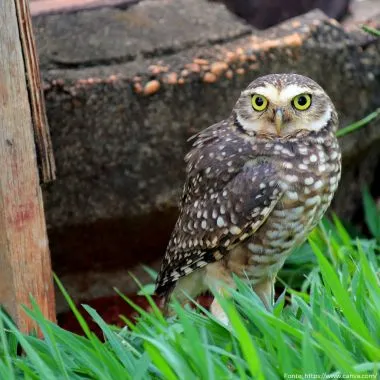
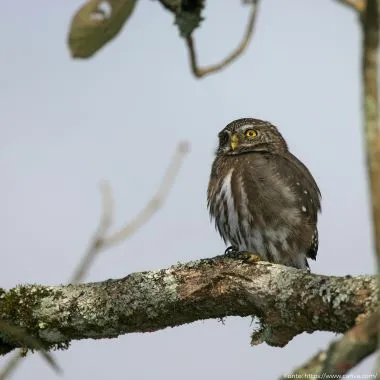
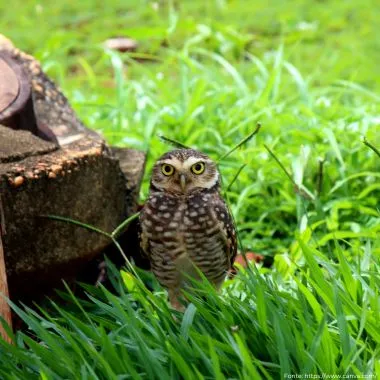
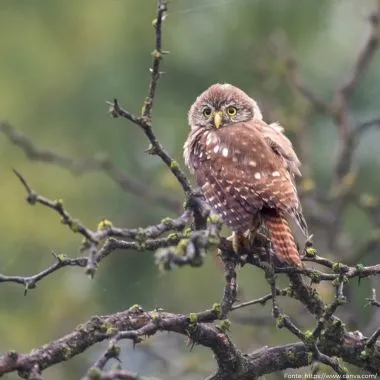
O caburé (Glaucidium brasilianum) é uma das menores corujas das Américas, medindo cerca de 16,5 cm de comprimento e pesando aproximadamente 63 g. Apesar do pequeno porte, possui aparência marcante, com grandes olhos amarelos, sobrancelhas brancas bem evidentes e duas variações naturais de plumagem: uma cinza e outra em tons castanho-avermelhados. Na parte de trás da cabeça apresenta um curioso desenho que lembra um segundo par de olhos, conhecido como "face falsa", capaz de confundir possíveis predadores e outras aves. Outra característica importante é a presença de estrias na testa, que ajudam a diferenciá-lo do caburé-miudinho (Glaucidium minutissimum).
The Ferruginous Pygmy Owl (Glaucidium brasilianum) is one of the smallest owls in the Americas, measuring about 16.5 cm (6.5 in) in length and weighing around 63 g (2.2 oz). Despite its tiny size, it has a striking appearance with large yellow eyes, bold white eyebrows, and two natural plumage color forms: gray and reddish-brown. On the back of its head, it displays a remarkable pattern resembling a second pair of eyes, often called a false face, which can confuse predators and other birds. A useful field mark is the presence of fine streaks on the forehead, distinguishing it from the Tiny Pygmy Owl (Glaucidium minutissimum).
AlimentaçãoFeeding
Alimenta-se de pequenos pássaros, insetos, lagartixas, rãs, pequenas serpentes e outros vertebrados de pequeno porte. Costuma caçar a partir de poleiros elevados, de onde observa atentamente o ambiente antes de lançar voos rápidos e precisos sobre a presa. Apesar do tamanho reduzido, demonstra grande força e coragem, podendo capturar animais várias vezes maiores que ele. Quando é descoberto, frequentemente é perseguido por diversas aves, que se reúnem para emitir chamados de alerta e tentar afastá-lo.
Its diet includes small birds, insects, lizards, frogs, small snakes, and other small vertebrates. It usually hunts from elevated perches, patiently watching its surroundings before launching swift, accurate attacks. Despite its small size, it is an exceptionally bold predator capable of catching prey several times larger than itself. When detected, it is often mobbed by groups of birds that loudly call and harass the owl in an attempt to drive it away.
ReproduçãoReproduction
O caburé utiliza cavidades naturais em árvores, cupinzeiros e até ninhos artificiais para reproduzir-se. A fêmea normalmente coloca dois a cinco ovos brancos, incubados em locais protegidos entre 4 e 6 metros de altura. Durante esse período, o casal demonstra comportamento altamente territorial, defendendo o ninho com surpreendente agressividade, independentemente do tamanho do invasor.
The Ferruginous Pygmy Owl nests in natural tree cavities, termite mounds, and readily accepts artificial nest boxes. The female usually lays two to five white eggs, which are incubated in protected sites about 4–6 m (13–20 ft) above the ground. During the breeding season, both adults vigorously defend the nest, showing remarkable courage regardless of the size of the intruder.
HábitosHabits
Habita bordas de florestas, cerrados, áreas abertas com árvores, matas de várzea e ambientes rurais. Ao contrário da maioria das corujas, permanece bastante ativo durante o dia, especialmente nas primeiras horas da manhã e no final da tarde, embora também possa caçar à noite. Costuma pousar em mourões, galhos expostos e fios elétricos, de onde vigia atentamente o ambiente. Seu voo é rápido, ondulado e relativamente ruidoso, diferente do voo silencioso característico de muitas outras corujas.
The Ferruginous Pygmy Owl inhabits forest edges, savannas, seasonally flooded forests, and open woodlands. Unlike most owls, it is frequently active during daylight, especially in the early morning and late afternoon, although it also hunts at night. It often perches on fence posts, exposed branches, and power lines while scanning for prey. Its flight is fast, undulating, and noticeably noisier than that of most other owl species.
ReferênciasReferences
Portal Brasil 500 Pássaros, Caburé - Disponível em http://webserver.eln.gov.br/Pass500/BIRDS/1birds/p134.htm Acesso em 12 mai. 2009 Aves de Rapina do Brasil - disponível em http://www.avesderapinabrasil.com/glaucidium_brasilianum.htm Acesso em 18 Set. 2009. SILVA, J., RIBENBOIM, L. C. da C., SANTOS, N. Corujas do Brasil. Taubaté, SP: Dica de Turismo Publicações, 2017. (https://www.wikiaves.com.br/wiki/cabure). Acesso em 16/12/2024.