Classificação científicaScientific classification
| Reino:Kingdom: | Animalia |
| Filo:Phylum: | Chordata |
| Classe:Class: | Aves |
| Ordem:Order: | Suliformes |
| Família:Family: | PhalacrocoracidaeReichenbach, 1849 |
| Espécie:Species: | N. brasilianum |
| Nome científico:Scientific name: | Nannopterum brasilianum(Gmelin, 1789) |
| Nome em inglês:English name: | Neotropic Cormorant |
CaracterísticasCharacteristics
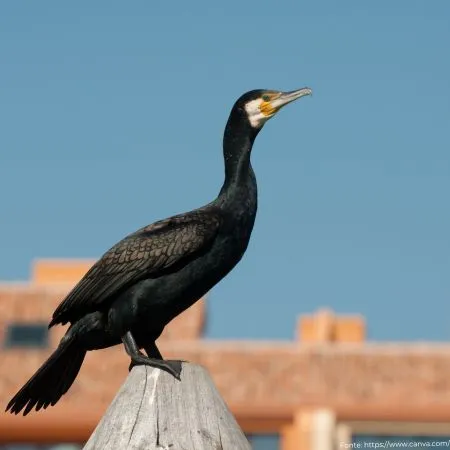
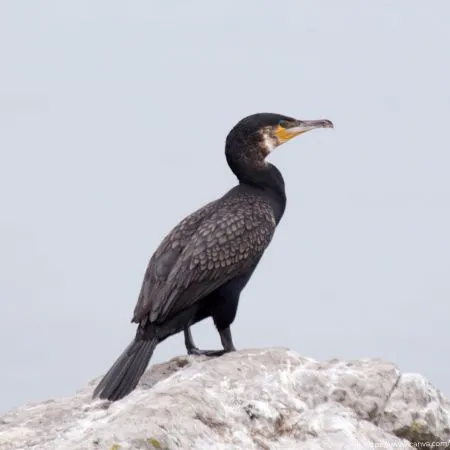
O biguá (Nannopterum brasilianum; anteriormente Phalacrocorax brasilianus) mede entre 58 e 73 cm de comprimento, pesa aproximadamente 1,2 a 1,4 kg e possui envergadura de cerca de 1 metro. Sua plumagem é predominantemente negra, contrastando com o saco gular amarelo e o bico longo, fino e levemente curvado na ponta, formando um pequeno gancho que facilita a captura dos peixes. Apresenta olhos azulados, pernas pretas e pés totalmente palmados, adaptados à vida aquática. Durante a época reprodutiva surgem pequenas penas brancas ao redor da garganta e atrás da cabeça, tornando sua aparência ainda mais elegante. Machos e fêmeas são muito semelhantes, enquanto os jovens possuem plumagem castanha mais clara.
The Neotropic Cormorant (Nannopterum brasilianum, formerly Phalacrocorax brasilianus) measures 58–73 cm (23–29 in) in length, weighs about 1.2–1.4 kg (2.6–3.1 lb), and has a wingspan of around 1 m (3.3 ft). Its plumage is almost entirely black, contrasting with the bright yellow throat pouch and the long, slender bill, which ends in a small hooked tip used to grip slippery fish. It has blue eyes, black legs, and fully webbed feet that make it an excellent swimmer. During the breeding season, small white feathers appear around the throat and behind the head. Males and females look alike, while juveniles are noticeably browner.
AlimentaçãoFeeding
Alimenta-se principalmente de peixes, mas também captura crustáceos, girinos, rãs e outros animais aquáticos. É um excelente mergulhador e persegue suas presas completamente submerso, utilizando os pés como principal forma de propulsão. Depois de capturar o peixe, retorna rapidamente à superfície para engoli-lo inteiro.
Its diet consists mainly of fish but also includes crustaceans, tadpoles, frogs, and other aquatic animals. It is an outstanding diver, pursuing prey entirely underwater while using its powerful webbed feet for propulsion. After catching a fish, it quickly returns to the surface and swallows it whole.
ReproduçãoReproduction
Forma casais monogâmicos e nidifica em colônias, geralmente em árvores próximas à água. O casal constrói um ninho de galhos e gravetos, forrado com vegetação macia. A fêmea normalmente coloca três a quatro ovos azulados, incubados por ambos os pais durante cerca de 23 a 26 dias. Após a eclosão, macho e fêmea alimentam os filhotes regurgitando peixes parcialmente digeridos. Os jovens tornam-se independentes por volta das 12 semanas de idade.
The Neotropic Cormorant forms monogamous pairs and nests in colonies, usually in trees near the water. Both adults build a nest of sticks and branches lined with softer vegetation. The female typically lays three to four bluish eggs, which are incubated by both parents for about 23–26 days. After hatching, the chicks are fed by both parents through regurgitation and become independent at around 12 weeks of age.
HábitosHabits
Habita rios, lagoas, represas, banhados, manguezais, estuários e até parques urbanos com grandes espelhos d'água. É uma ave aquática extremamente habilidosa, passando boa parte do tempo mergulhando em busca de alimento. Após sair da água, costuma permanecer pousada em galhos, pedras ou estacas com as asas totalmente abertas para secar a plumagem. Embora pareça desajeitado em terra, é um excelente nadador e voador. Fora do período reprodutivo pode ser observado sozinho ou formando pequenos grupos, frequentemente dormindo em árvores junto de garças e outras aves aquáticas.
The Neotropic Cormorant inhabits rivers, lakes, reservoirs, marshes, mangroves, estuaries, and even urban parks with large bodies of water. It spends much of its time diving for food and is often seen perched on branches, rocks, or posts with its wings fully spread to dry its feathers after swimming. Although somewhat awkward on land, it is an excellent swimmer and strong flyer. Outside the breeding season, it may be seen alone or in small groups, often roosting alongside herons and other waterbirds.
ReferênciasReferences
Prefeitura de São Paulo - disponível em http://ww2.prefeitura.sp.gov.br//arquivos/secretarias/meio_ambiente/fauna_flora/fauna/bigua.pdf Acesso em 01 mai. 2009. 2009. http://www.avesmarinhas.com.br/22.pdf Acesso em 01 mai. 2009. Diagnóstico do Tráfico de Animais Silvestres na Mata Atlântica - disponível em http://www.diagnostico.org.br/especies/Phalacrocorax-brasilianus Acesso em 01 mai. 2009. FUNDEVAP - disponível em http://www.fundevap.org.br/Downloads/Ornitologia/Phalacrocorax_brasilianus-Bigu%E1.pdf Acesso em 01 mai. 2009. http://animaldiversity.ummz.umich.edu/ http://eol.org/pages/1065006/details http://www.birds.com/ http://www.planetofbirds.com/ Sick, Helmut, Ornitologia Brasileira. Editora Nova Fronteira, Rio de Janeiro, 1997. SIGRIST, T. Avifauna Brasileira: The avis brasilis field guide to the birds of Brazil, 1ª edição, São Paulo: Editora Avis Brasilis, 2009. Contribuição: Omar Ramos Borges. CLEMENTS, J. F.; The Clements Checklist of Birds of the World. Cornell: Cornell University Press, 2014. https://www.wikiaves.com.br/wiki/bigua. Acesso em 15/12/2024.