Classificação científicaScientific classification
| Reino:Kingdom: | Animalia |
| Filo:Phylum: | Chordata |
| Classe:Class: | Aves |
| Ordem:Order: | Galbuliformes |
| Família:Family: | GalbulidaeVigors, 1825 |
| Espécie:Species: | G. ruficauda |
| Nome científico:Scientific name: | Galbula ruficaudaCuvier, 1816 |
| Nome em inglês:English name: | Rufous-tailed Jacamar |
CaracterísticasCharacteristics
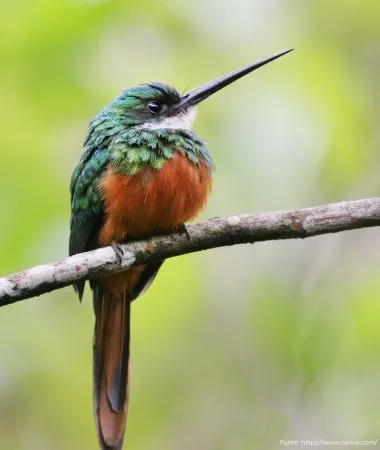
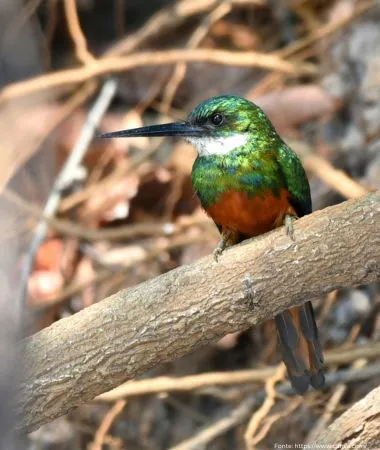
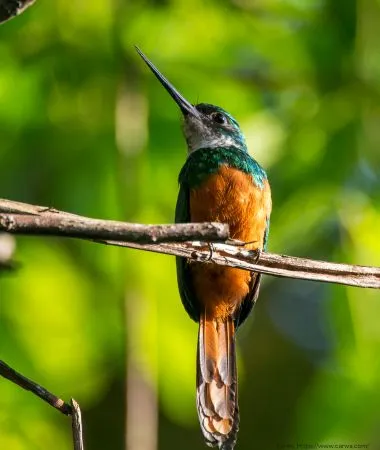
O bico-de-agulha (Galbula ruficauda) mede entre 19 e 25 cm de comprimento e pesa cerca de 18 a 28 g. É uma ave elegante da família das arirambas (Galbulidae), facilmente reconhecida pelo bico extremamente longo, fino e reto. À primeira vista lembra um grande beija-flor devido à plumagem verde metálica brilhante e ao formato do bico. O macho apresenta cabeça, peito e dorso verde-iridescentes, garganta branca e cauda longa, com as penas centrais verdes e as externas castanhas. A fêmea possui a garganta em tom ferrugíneo e o ventre um pouco mais claro que o do macho. Além da beleza da plumagem, destaca-se pela postura ereta e pela habilidade de permanecer imóvel durante longos períodos observando o ambiente.
The Rufous-tailed Jacamar (Galbula ruficauda) measures 19–25 cm (7.5–10 in) in length and weighs about 18–28 g (0.6–1 oz). It belongs to the jacamar family (Galbulidae) and is easily recognized by its remarkably long, slender bill. At first glance, it resembles a large hummingbird because of its brilliant metallic green plumage and elongated bill. The male has shimmering green upperparts, a white throat, and a long tail with green central feathers and chestnut outer feathers. The female differs by having a rufous throat and slightly paler underparts. Its upright posture and ability to remain perfectly still while watching for prey are among its most distinctive features.
AlimentaçãoFeeding
Alimenta-se exclusivamente de insetos capturados em pleno voo, demonstrando impressionante rapidez e precisão. Após capturar a presa, retorna ao mesmo poleiro, onde bate repetidamente o inseto contra o galho para remover asas, ferrões e partes rígidas antes de engoli-lo. Em seguida, permanece novamente atento, observando qualquer movimento ao redor.
The Rufous-tailed Jacamar feeds exclusively on flying insects, displaying remarkable speed and accuracy. After catching its prey, it returns to the same perch and repeatedly strikes the insect against the branch to remove wings, stingers, and hard body parts before swallowing it. It then resumes scanning the surroundings for its next meal.
ReproduçãoReproduction
O casal permanece unido durante boa parte do ano e divide os cuidados com a reprodução. O ninho é escavado em barrancos de terra, cupinzeiros arborícolas ou grandes torrões de solo presos às raízes de árvores caídas. A galeria é estreita e relativamente profunda, oferecendo proteção aos ovos e aos filhotes. A postura pode chegar a quatro ovos, incubados pelo macho e pela fêmea. Mesmo após deixarem o ninho, os filhotes continuam sendo alimentados pelos pais por algum tempo.
Pairs remain together for much of the year and share parental responsibilities. The nest is excavated in earthen banks, arboreal termite mounds, or large soil masses attached to fallen tree roots. The tunnel-shaped nest provides excellent protection for the eggs and chicks. The clutch may contain up to four eggs, which are incubated by both parents. Even after leaving the nest, the young continue to receive food from the adults for several weeks.
HábitosHabits
Habita bordas de florestas, clareiras, matas secas e áreas arborizadas, onde costuma permanecer pousado em galhos ou cipós entre 1 e 4 metros de altura. Utiliza repetidamente os mesmos poleiros para observar o ambiente e capturar insetos em voos rápidos. Seu canto lembra uma risada fina e acelerada, frequentemente respondida pelo parceiro, formando um verdadeiro diálogo entre o casal. É uma ave ativa durante todo o dia e costuma permitir boa aproximação, sendo considerada uma das espécies mais fáceis de observar entre as aves florestais.
The Rufous-tailed Jacamar inhabits forest edges, clearings, dry forests, and wooded habitats, where it usually perches on exposed branches or vines 1–4 m (3–13 ft) above the ground. It repeatedly uses the same lookout perches to watch for flying insects before launching rapid hunting flights. Its call resembles a high-pitched, accelerating laugh, often answered by its mate in a characteristic duet. Active throughout the day, it is remarkably tolerant of human presence and is considered one of the easiest forest birds to observe.
ReferênciasReferences
SESC - Guia de Aves do Pantanal - disponível em http://www.avespantanal.com.br/paginas/155.htm Acesso em em 18 abr. 2009 CEO - Dicionário de Nomes em Português das Aves Brasileiras - disponível em www.ceo.org.br Acesso em 15 dez. 2009. Chaine, Noelle M.. 2010. Rufous-tailed Jacamar (Galbula ruficauda), Neotropical Birds Online (T. S. Schulenberg, Editor). Ithaca: Cornell Lab of Ornithology; retrieved from Neotropical Birds Online: http://neotropical.birds.cornell.edu/portal/species/overview?p_p_spp=294936 https://www.wikiaves.com.br/wiki/ariramba-de-cauda-ruiva. Acesso em 18/12/2024.