Classificação científicaScientific classification
| Reino:Kingdom: | Animalia |
| Filo:Phylum: | Chordata |
| Classe:Class: | Aves |
| Ordem:Order: | Apodiformes |
| Família:Family: | TrochilidaeVigors, 1825 |
| Espécie:Species: | C. lucidus |
| Nome científico:Scientific name: | Chlorostilbon lucidus(Shaw, 1812) |
| Nome em inglês:English name: | Glittering-bellied Emerald |
CaracterísticasCharacteristics
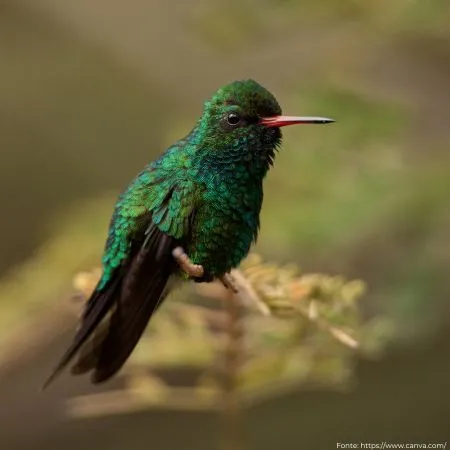
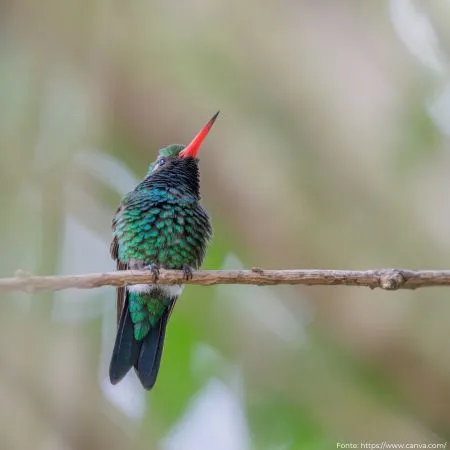
O besourinho-de-bico-vermelho (Chlorostilbon lucidus) mede entre 7,5 e 10,5 cm de comprimento e pesa cerca de 3 a 4,5 g, sendo um dos menores beija-flores encontrados no Brasil. Sua plumagem é predominantemente verde metálica, com reflexos dourados na testa e tons azulados na garganta. O bico vermelho com a ponta preta é sua principal característica de identificação. A cauda apresenta intenso brilho azul metálico e é levemente bifurcada. A fêmea possui uma discreta faixa branca atrás dos olhos, extremidades claras na cauda e plumagem menos brilhante que a do macho. Os jovens são muito semelhantes à fêmea até atingirem a plumagem adulta.
The Glittering-bellied Emerald (Chlorostilbon lucidus) measures 7.5–10.5 cm (3–4.1 in) in length and weighs about 3–4.5 g (0.1–0.16 oz), making it one of the smallest hummingbirds found in Brazil. Its plumage is predominantly metallic green, with golden reflections on the forehead and bluish iridescence on the throat. Its bright red bill with a black tip is the species' most distinctive feature. The tail is metallic blue and slightly forked. Females have a subtle white stripe behind the eye, pale tips on the tail feathers, and less brilliant plumage than males. Juveniles closely resemble adult females until they acquire their adult colors.
AlimentaçãoFeeding
Alimenta-se principalmente do néctar das flores, realizando a maior parte da alimentação em pleno voo. Também captura pequenos insetos, aranhas e outros artrópodes, que fornecem proteínas essenciais para seu desenvolvimento. Entre suas flores preferidas está a ruélia-azul (Ruellia coerulea), especialmente nas primeiras horas da manhã, quando a produção de néctar é mais abundante.
Its diet consists mainly of flower nectar, and it feeds almost entirely while hovering in flight. It also catches tiny insects, spiders, and other arthropods, which provide essential proteins. One of its favorite flowers is the blue ruellia (Ruellia coerulea), particularly during the early morning when nectar production is at its peak.
ReproduçãoReproduction
A fêmea constrói sozinha um pequeno ninho em forma de taça, utilizando fibras vegetais, líquens, fragmentos de folhas e teias de aranha, materiais que proporcionam excelente camuflagem. O ninho pode ser instalado em galhos finos, arbustos, plantas cultivadas ou até mesmo em raízes expostas de barrancos. A postura normalmente é de dois ovos, incubados por cerca de 15 a 18 dias. Após a eclosão, os filhotes permanecem no ninho por aproximadamente 20 dias, sendo alimentados exclusivamente pela fêmea, já que o macho não participa dos cuidados parentais.
The female alone builds a small cup-shaped nest using plant fibers, lichens, leaf fragments, and spider silk, creating excellent camouflage. The nest may be placed on slender branches, shrubs, cultivated plants, or even exposed roots along embankments. She usually lays two eggs, which hatch after 15–18 days. The chicks remain in the nest for about 20 days and are cared for exclusively by the female, as the male takes no part in raising the young.
HábitosHabits
Habita jardins, quintais floridos, áreas abertas, capoeiras e bordas de matas, sendo facilmente observado onde há abundância de flores. É uma ave extremamente ativa e territorial, defendendo vigorosamente suas fontes de alimento contra outros beija-flores. Também dedica parte do dia aos cuidados com a plumagem, tomando banhos de sol e realizando frequentes limpezas das penas, essenciais para manter a eficiência do voo e o isolamento térmico. Ao anoitecer, pousa em galhos finos e protegidos para descansar, adotando uma postura bastante característica com o bico voltado para a frente e a cabeça levemente elevada.
The Glittering-bellied Emerald inhabits gardens, flowering backyards, open habitats, secondary growth, and forest edges, where flowering plants are abundant. It is an extremely active and territorial bird, vigorously defending its feeding sites from other hummingbirds. It also spends part of the day grooming its feathers, sunbathing, and carefully maintaining its plumage, which is essential for efficient flight and insulation. At night, it roosts on slender, sheltered branches, adopting a distinctive posture with its bill pointing forward and its head slightly raised.
ReferênciasReferences
GUIA DE AVES DA GRANDE SÃO PAULO - Pedro Develey e Edson Endrigo. Aves e Fotos Editora, 2004. Native Alimentos - disponpível em http://www.nativealimentos.com.br/biodiversidade/especies_det.php?id=40 Acesso em 03 jun. 2009. CLEMENTS, J. F.; The Clements Checklist of Birds of the World. Cornell: Cornell University Press, 2014. ITIS - Integrated Taxonomic Information System (2015); Smithsonian Institution; Washington, DC. https://www.wikiaves.com.br/wiki/besourinho-de-bico-vermelho. Acesso em 18/12/2024.