Classificação científicaScientific classification
| Reino:Kingdom: | Animalia |
| Filo:Phylum: | Chordata |
| Classe:Class: | Aves |
| Ordem:Order: | Passeriformes |
| Família:Family: | TyrannidaeVigors, 1825 |
| Espécie:Species: | M. cayanensis |
| Nome científico:Scientific name: | Myiozetetes cayanensis(Linnaeus, 1766) |
| Nome em inglês:English name: | Rusty-margined Flycatcher |
CaracterísticasCharacteristics
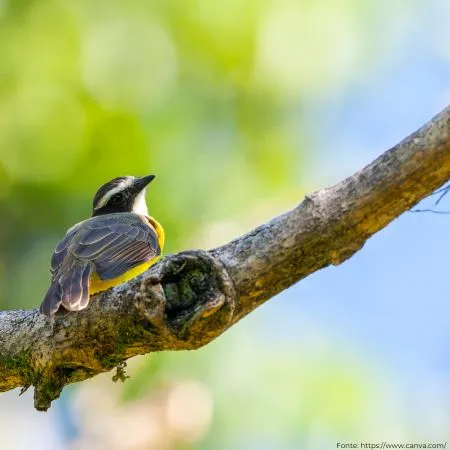
O bentevizinho-de-asa-ferrugínea (Myiozetetes cayanensis) mede entre 16,5 e 18 cm de comprimento e pesa cerca de 26 g. Apesar de lembrar o bem-te-vi, é menor e apresenta características próprias que permitem sua identificação. Possui dorso em tons oliva-acastanhados, garganta branca e peito e ventre amarelo-vivos. Acima dos olhos destaca-se uma larga faixa branca, enquanto o topo da cabeça abriga uma pequena mancha amarelo-alaranjada normalmente escondida pelas penas. As asas apresentam bordas ferrugíneas bem evidentes, característica que deu origem ao seu nome popular. O bico, as pernas e os pés são pretos, e os olhos têm coloração castanho-escura.
The Rusty-margined Flycatcher (Myiozetetes cayanensis) measures 16.5–18 cm (6.5–7.1 in) in length and weighs about 26 g (0.9 oz). Although it resembles the Great Kiskadee, it is smaller and has several distinctive features. Its upperparts are olive-brown, while the throat is white and the breast and belly are bright yellow. A broad white eyebrow stands out above the eyes, and a hidden yellow-orange crown patch can be revealed when the bird raises its feathers. The rusty-colored edges of the wings are one of its most distinctive identification marks. Its bill, legs, and feet are black, and the eyes are dark brown.
AlimentaçãoFeeding
Alimenta-se principalmente de pequenos artrópodes, como insetos e aranhas, capturados entre a vegetação ou durante voos rápidos. Costuma permanecer atento em galhos expostos, de onde observa cuidadosamente o ambiente antes de lançar-se para capturar suas presas com grande precisão.
Its diet consists mainly of small arthropods, including insects and spiders, which it catches among the vegetation or during short aerial pursuits. It often perches in exposed locations, carefully watching its surroundings before making quick, accurate flights to capture prey.
ReproduçãoReproduction
Durante o período reprodutivo, o casal realiza exibições com voos acompanhados de vocalizações. O ninho é fechado e arredondado, com entrada lateral, construído com fibras vegetais, capim e pequenos gravetos. Frequentemente é instalado próximo a ninhos de vespas ou em árvores com grande quantidade de formigas, estratégia que ajuda a reduzir o risco de ataques por predadores.
During the breeding season, the pair performs courtship displays that include aerial flights accompanied by vocalizations. The nest is enclosed and rounded, with a side entrance, and is built from grasses, plant fibers, and small twigs. It is often placed near wasp nests or in trees inhabited by many ants, a strategy believed to reduce the risk of predation.
HábitosHabits
Habita principalmente áreas arborizadas próximas a rios, lagoas e outros ambientes aquáticos, embora também possa ser encontrado em parques, jardins e bordas de mata. Costuma permanecer ereto sobre galhos expostos, movimentando frequentemente as asas e demonstrando comportamento bastante ativo. Gosta de aproveitar a chuva para se banhar na folhagem molhada e, ao anoitecer, pode reunir-se com outros indivíduos em locais protegidos para descansar. É uma ave territorial e não hesita em defender sua área quando necessário.
The Rusty-margined Flycatcher is commonly found in wooded areas near rivers, lakes, and other wetlands, but it also occurs in parks, gardens, and forest edges. It typically perches upright on exposed branches, frequently flicking its wings as it scans for prey. It often bathes in rain-soaked foliage and may gather with other individuals at sheltered roosting sites during the night. It is a territorial bird that readily defends its feeding area when necessary.
ReferênciasReferences
Hellmayr, C.E. (1927). Catalogue of Birds of the Americas and Adjacent Islands. Field Museum of Natural History. Tyrannidae. Publications, Zoological Series, Vol. XIII, Part V - Field Museum Press, Chicago, USA. 538p. Native Alimentos - disponível em http://www.nativealimentos.com.br/biodiversidade/especies_det.php?id=35 Acesso em 03 jun. 2009. Restall, Robin, Rodner, Clemencia & Lentino, Miguel (2007). Birds of Northern South America: An Identification Guide, Volume 1:Species Accounts Helm Field Guides. Ríos-Orjuela, J. C. (2021). Taxonomic revision of a widely spread distributed neotropical species: the Myiozetetes cayanensis complex (Linaeus, 1766) (Aves: Tyrannidae). Dissertação (Mestrado) – Universidade de São Paulo, São Paulo. Disponível em: https://www.teses.usp.br/teses/disponiveis/38/38131/tde-15042021-145531/. Acesso em: 01 ago. 2023. https://www.wikiaves.com.br/wiki/bentevizinho-de-asa-ferruginea. Acesso em 20/12/2024.