Classificação científicaScientific classification
| Reino:Kingdom: | Animalia |
| Filo:Phylum: | Chordata |
| Classe:Class: | Aves |
| Ordem:Order: | Passeriformes |
| Família:Family: | TyrannidaeVigors, 1825 |
| Espécie:Species: | P. Sulphuratus |
| Nome científico:Scientific name: | Pitangus sulphuratus(Linnaeus, 1766) |
| Nome em inglês:English name: | Great Kiskadee |
CaracterísticasCharacteristics
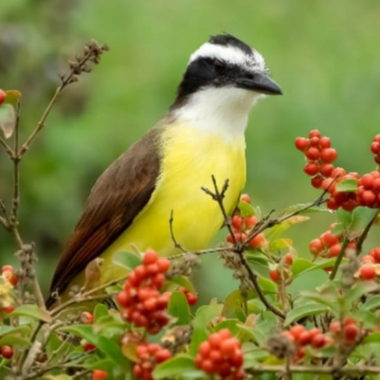
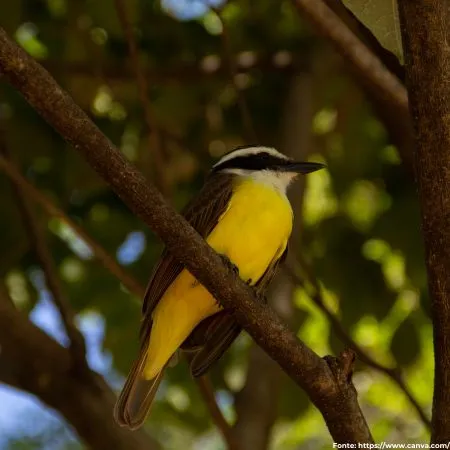
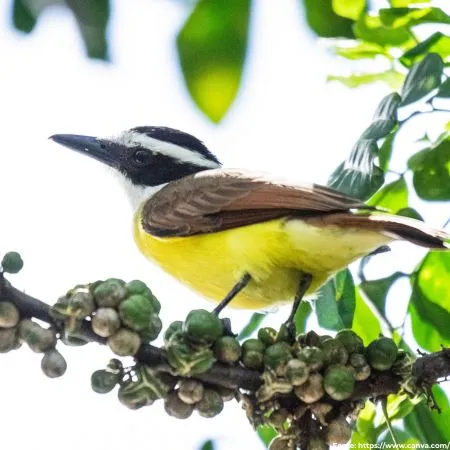
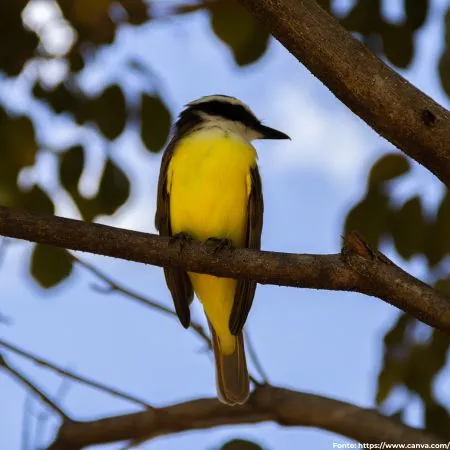
O bem-te-vi (Pitangus sulphuratus) mede entre 20,5 e 25 cm de comprimento e pesa aproximadamente 52 a 68 g. É uma das aves mais conhecidas e facilmente reconhecidas do Brasil. Possui dorso marrom, peito e ventre amarelos intensos, garganta branca e uma faixa branca acima dos olhos. No topo da cabeça esconde uma pequena mancha amarela, normalmente invisível, que aparece quando a ave eriça as penas durante momentos de excitação ou defesa. Seu bico é preto, forte e levemente curvado, ideal para capturar uma grande variedade de presas. O canto característico, que soa como "bem-te-vi", deu origem ao seu nome popular e pode ser ouvido em praticamente todo o país.
The Great Kiskadee (Pitangus sulphuratus) measures 20.5–25 cm (8–10 in) in length and weighs about 52–68 g (1.8–2.4 oz). It is one of the most familiar and recognizable birds in Brazil. It has brown upperparts, a bright yellow breast and belly, a white throat, and a bold white stripe above the eyes. Hidden on the top of its head is a small yellow crown patch that becomes visible when the bird raises its feathers during displays or moments of excitement. Its sturdy black bill is well suited for catching a wide variety of prey. Its unmistakable call, which sounds like "bem-te-vi", inspired its Portuguese common name.
AlimentaçãoFeeding
O bem-te-vi possui uma alimentação extremamente variada, sendo considerado uma ave onívora e oportunista. Consome insetos, frutas, pequenos peixes, girinos, crustáceos, lagartos, minhocas, pequenas serpentes, ovos e filhotes de outras aves, além de pequenos roedores. Também captura insetos em pleno voo e frequentemente procura alimento próximo à água. É comum visitar árvores frutíferas, jardins e comedouros, contribuindo tanto para o controle natural de insetos quanto para a dispersão de sementes de diversas plantas.
The Great Kiskadee has an extremely varied diet and is considered an omnivorous opportunist. It feeds on insects, fruits, small fish, tadpoles, crustaceans, lizards, earthworms, small snakes, eggs, nestlings, and even small rodents. It also catches insects in midair and frequently searches for food near water. The species often visits fruiting trees, gardens, and bird feeders, helping both with natural insect control and seed dispersal.
ReproduçãoReproduction
O casal constrói um ninho grande e fechado, geralmente em formato esférico, utilizando capim, gravetos, fibras vegetais e, em áreas urbanas, materiais como barbantes, papel, plástico e fios. A entrada costuma ficar na lateral da estrutura, oferecendo maior proteção aos ovos e filhotes. A fêmea normalmente coloca de dois a quatro ovos, de coloração creme com pequenas manchas avermelhadas. A espécie também pode utilizar cavidades naturais ou estruturas artificiais para nidificar.
The pair builds a large enclosed nest, usually spherical in shape, using grass, twigs, plant fibers, and, in urban areas, materials such as string, paper, plastic, and even wire. The entrance is typically located on the side, providing extra protection for the eggs and chicks. The female usually lays two to four cream-colored eggs marked with reddish-brown spots. The species may also nest in natural cavities or artificial structures.
HábitosHabits
O bem-te-vi adapta-se facilmente aos mais diversos ambientes, sendo encontrado em cidades, fazendas, áreas rurais, margens de rios, lagoas, praias e bordas de florestas. Costuma permanecer em locais altos e bem visíveis, como postes, cercas, árvores e telhados, de onde observa atentamente tudo ao seu redor. É uma ave extremamente territorial e corajosa, frequentemente atacando gaviões, urubus e outras aves muito maiores para proteger seu território ou seu ninho. Seu canto forte e repetitivo faz parte da paisagem sonora brasileira e normalmente está entre os primeiros sons ouvidos ao amanhecer.
The Great Kiskadee adapts easily to many different environments, including cities, farms, riverbanks, lakes, beaches, and forest edges. It usually perches in exposed places such as utility poles, fences, treetops, and rooftops, where it carefully watches its surroundings. This species is highly territorial and remarkably fearless, often chasing hawks, vultures, and other much larger birds away from its territory or nest. Its loud, repetitive call is one of the most familiar bird sounds in Brazil and is often among the first to be heard at sunrise.
ReferênciasReferences
LAGO-PAIVA, Celso, 1996. Cavity nesting by Great kiskadees (Pitangus sulphuratus [Tyrannidae]): adaptation or expression of ancestral behavior? Auk 113(4):953-955, Norman, Oklahoma. Portal São Francisco, Bem-te-vi - Disponível em: http://portalsaofrancisco.com.br/alfa/bem-te-vi. Acesso em: 08 mar. 2009. SANTIAGO, R. G. Bem-te-vi ( Pitangus sulphuratus ) Biblioteca Digital de Ciências, 05 feb. 2007. Disponível em: http://www.ib.unicamp.br/lte/bdc/visualizarMaterial.php?idMaterial=409>. Acesso em: 08 mar. 2009. Portal Brasil 500 Pássaros, Bem-te-vi - Disponível em http://webserver.eln.gov.br/Pass500/BIRDS/1eye.htm. Acesso em 30 abr. 2009. Frisch, Johan Dalgas. Aves brasileiras e plantas que as atraem 3ª ed.. Dalgas ecoltec, São Paulo, 2005, p.350. CLEMENTS, J. F.; The Clements Checklist of Birds of the World. Cornell: Cornell University Press, 2014. https://www.wikiaves.com.br/wiki/bem-te-vi. Acesso em 15/12/2024.