Classificação científicaScientific classification
| Reino:Kingdom: | Animalia |
| Filo:Phylum: | Chordata |
| Classe:Class: | Aves |
| Ordem:Order: | Apodiformes |
| Família:Family: | TrochilidaeVigors, 1825 |
| Espécie:Species: | H. chrysura |
| Nome científico:Scientific name: | Hylocharis chrysura(Shaw, 1812) |
| Nome em inglês:English name: | Gilded Hummingbird |
CaracterísticasCharacteristics
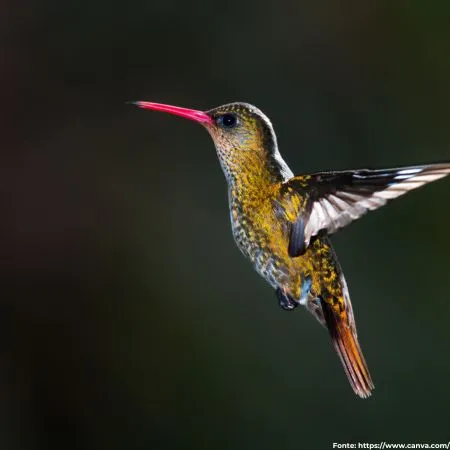
O beija-flor-dourado (Hylocharis chrysura) mede entre 8 e 10 cm de comprimento e pesa cerca de 4 a 5 g. É uma pequena joia da natureza, conhecida pelos reflexos dourados e acobreados que surgem em sua plumagem quando iluminada pelo sol. O corpo é predominantemente verde metálico com intenso brilho dourado. A cauda apresenta tonalidades verde-douradas altamente iridescentes, enquanto o bico vermelho vivo, com a ponta preta, torna a espécie ainda mais fácil de reconhecer. Atrás dos olhos existe uma pequena mancha branca bastante discreta. Machos e fêmeas são muito semelhantes, embora a fêmea apresente plumagem um pouco menos brilhante e a região inferior do ventre levemente acinzentada.
The Gilded Hummingbird (Hylocharis chrysura) measures 8–10 cm (3.1–4 in) in length and weighs about 4–5 g (0.14–0.18 oz). It is a tiny jewel of the Neotropics, famous for the brilliant golden and coppery reflections that shimmer across its plumage in sunlight. Its body is predominantly metallic green with intense golden iridescence. The tail glows with greenish-gold tones, while the bright red bill with a black tip makes the species easy to identify. A small white spot behind the eye completes its elegant appearance. Males and females are very similar, although females are generally slightly duller and have a faint grayish wash on the lower belly.
AlimentaçãoFeeding
Alimenta-se principalmente do néctar das flores, que fornece a energia necessária para seu metabolismo extremamente acelerado. Também captura pequenos insetos, aranhas e outros artrópodes, tanto em voo quanto sobre folhas e galhos. Esses alimentos fornecem proteínas essenciais para seu desenvolvimento e reprodução.
Its diet consists mainly of flower nectar, which provides the energy required for its extremely high metabolism. It also catches tiny insects, spiders, and other arthropods, either in flight or from leaves and branches. These protein-rich foods are especially important during growth and breeding.
ReproduçãoReproduction
A reprodução ocorre principalmente entre setembro e fevereiro. A fêmea constrói sozinha um delicado ninho em formato de taça utilizando fibras vegetais macias, paina, líquens e teias de aranha, materiais que garantem resistência e flexibilidade à estrutura. O ninho costuma ser instalado em galhos finos ou pequenas forquilhas, geralmente entre 4 e 6 metros de altura. A postura normalmente é de dois ovos, incubados durante 14 a 15 dias. Os filhotes deixam o ninho após aproximadamente 20 a 28 dias.
Breeding usually takes place between September and February. The female alone builds a delicate cup-shaped nest using soft plant fibers, seed fluff, lichens, and spider silk, creating a light but remarkably strong structure. The nest is typically placed on slender horizontal branches or small forks, usually 4–6 m (13–20 ft) above the ground. She normally lays two eggs, which are incubated for 14–15 days. The chicks fledge after about 20–28 days.
HábitosHabits
Habita florestas, cerradões, bordas de mata, áreas arborizadas e jardins, adaptando-se muito bem a ambientes urbanos com abundância de flores. É uma ave extremamente ativa e territorial, defendendo vigorosamente suas plantas favoritas contra outros beija-flores. Durante o dia visita centenas de flores, desempenhando importante papel na polinização de inúmeras espécies vegetais.
The Gilded Hummingbird inhabits forests, wooded savannas, forest edges, parks, and gardens, adapting well to urban areas with abundant flowering plants. It is a highly active and territorial species, vigorously defending its favorite flowers from other hummingbirds. Throughout the day, it visits hundreds of blossoms, playing an essential role in the pollination of many plant species.
ReferênciasReferences
SESC - Guia de Aves do Pantanal - Disponível em: http://www.avespantanal.com.br/paginas/142.htm Acesso em 26 abr. 2009. SIGRIST, T. (2009) Avifauna Brasileira: The avis brasilis field guide to the birds of Brazil, 1ª edição, São Paulo: Editora Avis Brasilis. Sick, helmut. Ornitologia Brasileira. Editora Nova Fronteira, Rio de Janeiro, 1997. Wikipédia - A enciclopédia livre - Disponível em: http://pt.wikipedia.org/wiki/Beija-flor-dourado Acesso em 26 abr. 2009. https://birdsoftheworld.org/bow/species/gilhum1/cur/introduction https://www.wikiaves.com.br/wiki/beija-flor-dourado. Acesso em 18/12/2024.