Classificação científicaScientific classification
| Reino:Kingdom: | Animalia |
| Filo:Phylum: | Chordata |
| Classe:Class: | Aves |
| Ordem:Order: | Psittaciformes |
| Família:Family: | PsittacidaeRafinesque, 1815 |
| Espécie:Species: | T. acuticaudatus |
| Nome científico:Scientific name: | Thectocercus acuticaudatus(Vieillot, 1818) |
| Nome em inglês:English name: | Blue-crowned Parakeet |
CaracterísticasCharacteristics
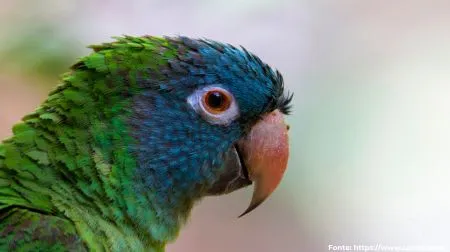
A aratinga-de-testa-azul (Thectocercus acuticaudatus, anteriormente Aratinga acuticaudata) mede entre 34 e 38 cm de comprimento e possui corpo esguio, cauda longa e graduada, típica das aratingas. Sua plumagem é predominantemente verde, destacando-se a testa, a parte superior da cabeça e as bochechas azuladas. A parte inferior das asas apresenta tons amarelo-esverdeados, enquanto as penas centrais da cauda possuem coloração avermelhada. Seu voo rápido e elegante, aliado às vocalizações intensas, torna a espécie facilmente reconhecível mesmo à distância.
The Blue-crowned Parakeet (Thectocercus acuticaudatus, formerly Aratinga acuticaudata) measures 34–38 cm (13–15 in) in length and has the slender body and long, tapered tail typical of parakeets in this group. Its plumage is mostly green, highlighted by a bright blue forehead, crown, and cheeks. The undersides of the wings are yellowish-green, while the central tail feathers have a reddish tint. Its swift, graceful flight and loud calls make it easy to recognize, even from a distance.
AlimentaçãoFeeding
Alimenta-se principalmente de frutos, sementes, brotos, flores e pecíolos, explorando árvores e arbustos em busca de alimento. Dependendo da época do ano, também aproveita frutos cultivados e outras fontes disponíveis, realizando deslocamentos para acompanhar a oferta de alimento.
Its diet consists mainly of fruits, seeds, young shoots, flowers, and leaf stalks, which it gathers while foraging among trees and shrubs. Depending on the season, it may also feed on cultivated fruits and other available food sources, moving across the landscape in search of resources.
ReproduçãoReproduction
A aratinga-de-testa-azul utiliza cavidades naturais em árvores para construir o ninho, normalmente entre 1 e 6 metros de altura, aproveitando ocos disponíveis na vegetação. Após a postura dos ovos, o casal divide os cuidados com a incubação e a alimentação dos filhotes até que estejam prontos para deixar o ninho.
The Blue-crowned Parakeet nests in natural tree cavities, usually located 1–6 m (3–20 ft) above the ground, making use of existing hollows. After the eggs are laid, both parents share the responsibilities of incubation and feeding the chicks until they are ready to leave the nest.
HábitosHabits
Habita florestas secas, matas de galeria, áreas de brejo, vegetação sobre dunas e outros ambientes arborizados, podendo ser encontrada desde regiões baixas até cerca de 2.650 metros de altitude. É uma espécie bastante sociável, vivendo em casais, pequenos grupos ou grandes bandos, especialmente nos locais de alimentação e dormitórios coletivos. Durante o voo, mantém constante comunicação por meio de vocalizações altas e características, tornando sua presença facilmente perceptível. Também pode realizar deslocamentos sazonais em busca de alimento, acompanhando a disponibilidade de frutos ao longo do ano.
The Blue-crowned Parakeet inhabits dry forests, gallery forests, wetlands, dune vegetation, and other wooded habitats, occurring from lowlands to elevations of about 2,650 m (8,700 ft). It is a highly social species, living in pairs, small groups, or large flocks, especially at feeding areas and communal roosts. While flying, individuals maintain constant contact through loud, distinctive calls, making the species easy to detect even before it is seen. The species may also undertake seasonal local movements in search of food as fruit availability changes throughout the year.
ReferênciasReferences
Mahecha, José Vicente Rodríguez; Suárez, Franklin Rojas; Arzuza, Diana Esther; Hernández, Andrés Gonzáles. Loros, Pericos & Guacamayas Neotropicales. Panamericana Formas e Impresos S.A., Bogota D.C., 2005, Pág. 65. CLEMENTS, J. F.; The Clements Checklist of Birds of the World. Cornell: Cornell University Press, 2012. The World Bird Database, AVIBASE; http://avibase.bsc-eoc.org/species.jsp?avibaseid=4BE8E5F1B316CC94 Handbook of the Birds of the World Alive. Lynx Edicions, Barcelona. ITIS - Integrated Taxonomic Information System (2015); Smithsonian Institution; Washington, DC. https://www.wikiaves.com.br/wiki/aratinga-de-testa-azul. Acesso em 16/12/2024.