Classificação científicaScientific classification
| Reino:Kingdom: | Animalia |
| Filo:Phylum: | Chordata |
| Classe:Class: | Aves |
| Ordem:Order: | Passeriformes |
| Família:Family: | DendrocolaptidaeGray, 1840 |
| Espécie:Species: | L. angustirostris |
| Nome científico:Scientific name: | Lepidocolaptes angustirostris(Vieillot, 1818) |
| Nome em inglês:English name: | Narrow-billed Woodcreeper |
CaracterísticasCharacteristics
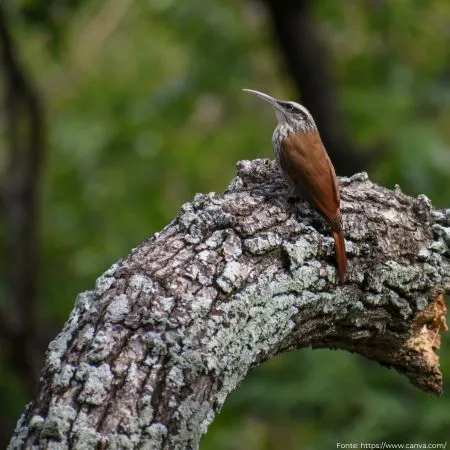
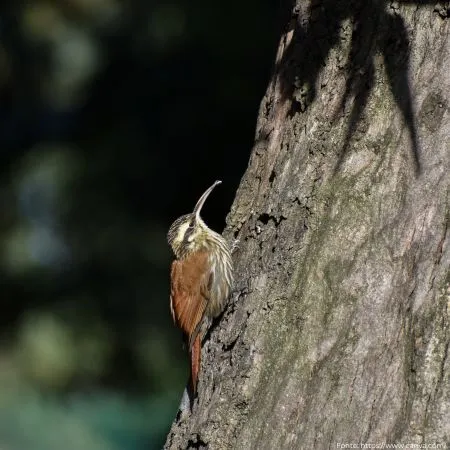
O arapaçu-de-cerrado (Lepidocolaptes angustirostris) mede cerca de 20 cm de comprimento e é facilmente reconhecido pela larga faixa branca acima dos olhos e pelas partes inferiores claras, que contrastam com a plumagem marrom rajada do dorso. Possui corpo esguio, cauda rígida e um bico longo, fino e levemente curvado, perfeitamente adaptado para procurar alimento nas fendas da casca das árvores. Sua aparência e comportamento lembram os dos pica-paus, embora pertença a outro grupo de aves.
The Narrow-billed Woodcreeper (Lepidocolaptes angustirostris) measures about 20 cm (8 in) in length and is easily recognized by its bold white eyebrow stripe and pale underparts, which contrast with its streaked brown upperparts. It has a slender body, a stiff tail, and a long, slightly curved bill specially adapted for searching for food in cracks and crevices in tree bark. Although its climbing behavior resembles that of woodpeckers, it belongs to a different family of birds.
AlimentaçãoFeeding
Alimenta-se principalmente de insetos e outros pequenos invertebrados encontrados nos troncos e galhos das árvores. Utiliza o longo bico para explorar frestas na casca, bromélias, mourões de cerca e postes de madeira. Sua dieta inclui formigas, besouros, lagartas, aranhas, escorpiões e, ocasionalmente, pequenos anfíbios e lagartixas.
Its diet consists mainly of insects and other small invertebrates found on tree trunks and branches. Using its long bill, it probes bark crevices, bromeliads, wooden fence posts, and tree limbs in search of prey. It feeds on ants, beetles, caterpillars, spiders, scorpions, and occasionally small amphibians and lizards.
ReproduçãoReproduction
O arapaçu-de-cerrado nidifica em cavidades naturais de árvores, utilizando com frequência antigos ocos escavados por pica-paus. O interior do ninho é revestido com folhas secas e fragmentos de casca. A postura normalmente é de dois ovos brancos. Após o período reprodutivo, a espécie costuma integrar bandos mistos de aves, embora seja observada, na maior parte do tempo, em casais.
The Narrow-billed Woodcreeper nests in natural tree cavities, often reusing abandoned woodpecker holes. The nest chamber is lined with dry leaves and pieces of bark. The female usually lays two white eggs. After the breeding season, the species often joins mixed-species flocks, although it is most commonly observed in pairs.
HábitosHabits
Habita o Cerrado, a Caatinga e áreas abertas com árvores esparsas, sendo uma espécie tipicamente arborícola. Passa grande parte do tempo escalando troncos e galhos em busca de alimento. Apoia-se com a cauda rígida enquanto sobe verticalmente pelas árvores e, ao alcançar a parte mais alta, voa até outro tronco para reiniciar a busca. Esse comportamento é uma das características mais marcantes da espécie. Apesar de viver principalmente nas árvores, ocasionalmente desce ao solo para beber água. Quando se sente ameaçado, costuma esconder-se atrás do tronco, permanecendo imóvel até que o perigo passe.
The Narrow-billed Woodcreeper inhabits the Cerrado, the Caatinga, and other open landscapes with scattered trees, spending nearly all of its time in wooded habitats. It is most often seen climbing tree trunks and branches while searching for food. Using its stiff tail for support, it ascends vertically before flying to the base of another tree and repeating the process—a behavior that is characteristic of woodcreepers. Although primarily arboreal, it occasionally comes down to the ground to drink water. When threatened, it often hides behind tree trunks, remaining motionless until the danger has passed.
ReferênciasReferences
Argel, M., 2001. Arapaçu-do-cerrado (Lepidocolaptes angustirostris). In: www.marthaargel.com.br. Acesso em 02 mai. 2009. Native - disponível em http://www.nativealimentos.com.br/biodiversidade/especies_det.php?id=18 Acesso em 02 mai. 2009. CEO - disponível em http://www.ceo.org.br/ Acesso em 02 mai. 2009. del Hoyo, Josep.,et. al. 2010. 40.- Narrow-billed Woodcreeper (Lepidocolaptes angustirostris). In: Handbook of the Birds of the World. Acesso em 07 fev. 2012. CLEMENTS, J. F.; The Clements Checklist of Birds of the World. Cornell: Cornell University Press, 2005. https://www.wikiaves.com.br/wiki/arapacu-de-cerrado. Acesso em 18/12/2024.