Classificação científicaScientific classification
| Reino:Kingdom: | Animalia |
| Filo:Phylum: | Chordata |
| Classe:Class: | Aves |
| Ordem:Order: | Cuculiformes |
| Família:Family: | CuculidaeLeach, 1820 |
| Espécie:Species: | C .ani |
| Nome científico:Scientific name: | Crotophaga aniLinnaeus, 1758 |
| Nome em inglês:English name: | Smooth-billed Ani |
CaracterísticasCharacteristics
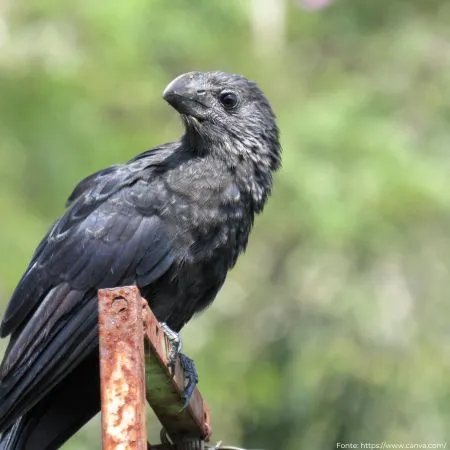
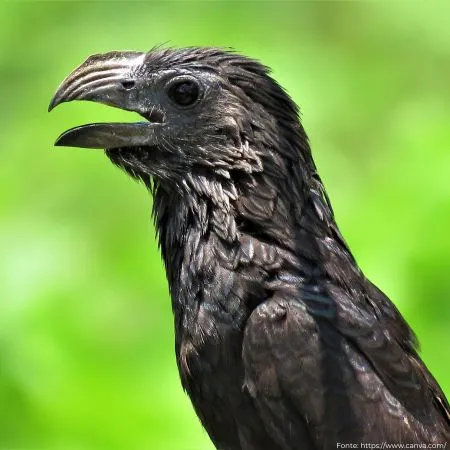
O anu-preto (Crotophaga ani) mede entre 35 e 36 cm de comprimento e pesa entre 76 e 222 g, sendo os machos, em geral, maiores que as fêmeas. Sua plumagem é inteiramente preta, com leve brilho azulado sob a luz. Possui cauda longa, bico robusto e alto, com uma característica saliência na parte superior, além de pernas fortes que facilitam sua movimentação entre galhos e no solo. É uma ave extremamente sociável, vivendo quase sempre em bandos familiares que permanecem unidos durante todo o ano. Apresenta uma grande variedade de vocalizações utilizadas para comunicação, alerta e interação entre os membros do grupo.
The Smooth-billed Ani (Crotophaga ani) measures 35–36 cm (14 in) in length and weighs 76–222 g (2.7–7.8 oz), with males generally being larger than females. Its plumage is entirely black, often showing a subtle bluish gloss in sunlight. It has a long tail, a large, deep bill with a distinctive ridge along the upper mandible, and strong legs that allow it to move easily through vegetation and on the ground. An extremely social bird, it almost always lives in family groups that remain together throughout the year. It has a rich variety of vocalizations used for communication, warning calls, and maintaining group cohesion.
AlimentaçãoFeeding
O anu-preto alimenta-se principalmente de insetos, como gafanhotos, besouros, percevejos e aranhas, além de outros pequenos invertebrados. Também captura lagartixas, rãs, pequenas serpentes, camundongos e pode pescar em águas rasas. Sua dieta é complementada por frutos, sementes e pequenos coquinhos, especialmente durante a estação seca. Frequentemente acompanha rebanhos de gado ou tratores agrícolas, aproveitando os insetos espantados durante o deslocamento. Em algumas situações, realiza caçadas cooperativas com outros integrantes do bando.
The Smooth-billed Ani feeds mainly on insects such as grasshoppers, beetles, true bugs, spiders, and other small invertebrates. It also captures lizards, frogs, small snakes, mice, and occasionally catches fish in shallow water. Its diet is supplemented with fruits, seeds, and small palm fruits, particularly during the dry season. It is often seen following cattle or farm machinery to catch insects disturbed by their movement. Members of a group may also cooperate while foraging.
ReproduçãoReproduction
A reprodução é marcada por um comportamento cooperativo bastante desenvolvido. Embora possa construir ninhos individuais, é comum que vários casais utilizem um único ninho coletivo, onde diferentes fêmeas depositam seus ovos e compartilham os cuidados com a incubação e a criação dos filhotes. Os ovos possuem coloração azul-esverdeada recoberta por uma camada calcária branca. A incubação dura cerca de 13 a 16 dias, e tanto os adultos quanto indivíduos jovens do grupo podem colaborar na alimentação e proteção dos filhotes.
The Smooth-billed Ani has a remarkable cooperative breeding system. Although individual nests may occur, several pairs often share a single communal nest, where multiple females lay eggs and collectively care for the young. The eggs are bluish-green and covered with a white chalky coating. Incubation lasts about 13–16 days, and both adults and older offspring may help feed and protect the chicks.
HábitosHabits
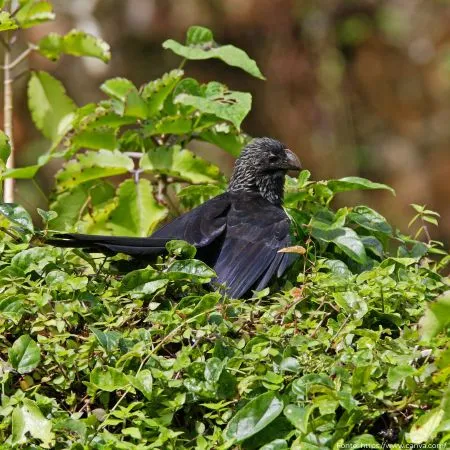
Habita áreas abertas, pastagens, campos, bordas de matas, plantações, jardins e ambientes rurais. É uma das aves mais comuns em paisagens modificadas pelo ser humano. Passa boa parte do tempo caminhando pelo solo ou pousado sobre cercas, arbustos e animais de criação, observando atentamente o ambiente em busca de alimento. Costuma tomar banhos de sol e de poeira para auxiliar na manutenção da plumagem. Ao anoitecer, reúne-se com o bando em moitas densas ou bambuzais, onde todos dormem próximos uns dos outros, comportamento que contribui para a proteção do grupo e a conservação do calor corporal.
The Smooth-billed Ani inhabits open habitats such as grasslands, pastures, farmland, forest edges, gardens, and rural landscapes. It is one of the most common birds in areas modified by human activity. It spends much of its time walking on the ground or perching on fences, shrubs, and livestock while searching for food. It frequently sunbathes and dust-bathes, helping to maintain the condition of its feathers. At dusk, members of the flock gather in dense shrubs or bamboo thickets, where they roost closely together through the night, a behavior that provides warmth and protection.
ReferênciasReferences
Native Alimentos - disponível em http://www.nativealimentos.com.br/biodiversidade/especies_det.php?id=17 Acesso em 14 jun. 2009. Payne, R. & Kirwan, G.M. (2016). Smooth-billed Ani (Crotophaga ani). In: del Hoyo, J., Elliott, A., Sargatal, J., Christie, D.A. & de Juana, E. (eds.). Handbook of the Birds of the World Alive. Lynx Edicions, Barcelona. Portal Brasil 500 Pássaros, Anu-preto. Disponível em: http://webserver.eln.gov.br/Pass500/BIRDS/1birds/p126.htm. Acessado em: 06 mai. 2009 CLEMENTS, J. F., T. S. Schulenberg, M. J. Iliff, D. Roberson, T. A. Fredericks, B. L. Sullivan, and C. L.. The Clements checklist of Birds of the World: Version 6.9; Cornell: Cornell University Press, 2014. del Hoyo, J.; et al., (2014). Handbook of the Birds of the World Alive. Lynx Edicions, Barcelona. ITIS - Integrated Taxonomic Informatio https://www.wikiaves.com.br/wiki/anu-preto. Acesso em 16/12/2024.