Classificação científicaScientific classification
| Reino:Kingdom: | Animalia |
| Filo:Phylum: | Chordata |
| Classe:Class: | Aves |
| Ordem:Order: | Cuculiformes |
| Família:Family: | CuculidaeLeach, 1820 |
| Espécie:Species: | C. major |
| Nome científico:Scientific name: | Crotophaga majorGmelin, 1788 |
| Nome em inglês:English name: | Greater Ani |
CaracterísticasCharacteristics
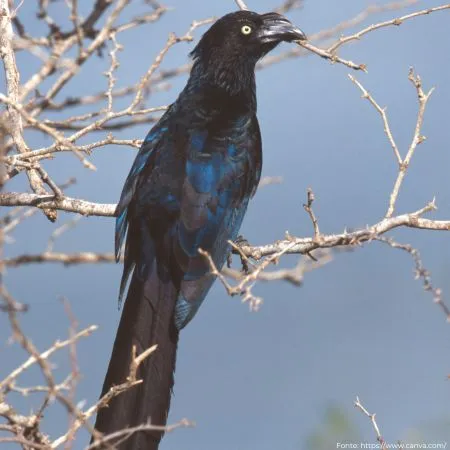
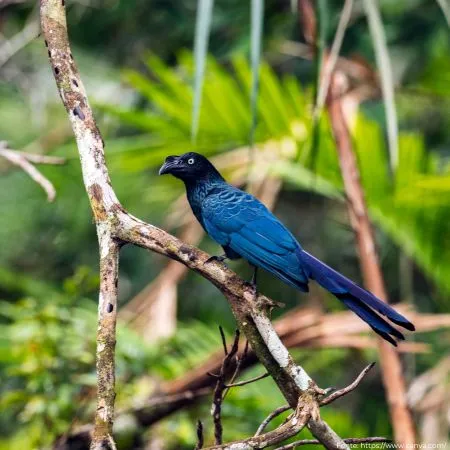
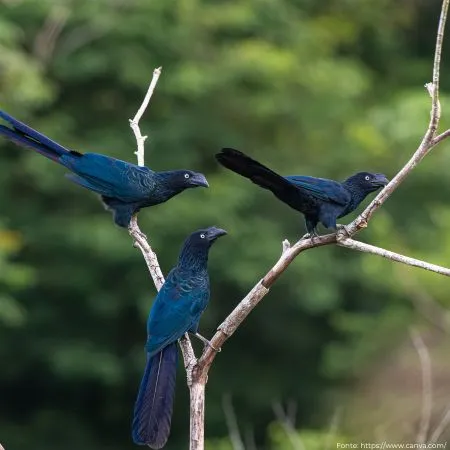
O anu-coroca (Crotophaga major) mede cerca de 46 cm de comprimento e pesa aproximadamente 150 g, sendo a maior espécie de anu encontrada no Brasil. Sua plumagem é inteiramente azul-escura com brilho metálico, contrastando com os olhos branco-esverdeados. Possui cauda longa e um bico robusto, alto e curvado, com uma crista bem evidente na parte superior, característica marcante da espécie. É uma ave extremamente vocal. Vive em grupos familiares e produz cantos coletivos bastante sincronizados, formando um coro que pode ser ouvido a grandes distâncias. Normalmente os bandos são compostos por dois a sete casais, embora ocasionalmente possam reunir mais de vinte indivíduos.
The Greater Ani (Crotophaga major) measures about 46 cm (18 in) in length and weighs approximately 150 g (5.3 oz), making it the largest ani species found in Brazil. Its plumage is entirely glossy blue-black with a metallic sheen, contrasting with its pale greenish-white eyes. It has a long tail and a large, strongly curved bill with a prominent ridge along the upper mandible, one of the species' most distinctive features. A highly vocal bird, the Greater Ani lives in family groups and is well known for its loud, synchronized chorus calls that can be heard over long distances. Groups usually consist of two to seven breeding pairs, although flocks of more than twenty birds are occasionally observed.
AlimentaçãoFeeding
Alimenta-se principalmente de insetos, aranhas e outros artrópodes, mas possui dieta bastante variada. Também caça pequenos vertebrados, captura peixes em águas rasas e consome frutos, sementes e pequenos coquinhos. Ocasionalmente acompanha formigas-de-correição, aproveitando os pequenos animais espantados durante seu deslocamento.
Its diet consists mainly of insects, spiders, and other arthropods, but it is an opportunistic feeder. It also hunts small vertebrates, catches fish in shallow water, and eats fruits, seeds, and small palm fruits. It occasionally follows army ant swarms, taking advantage of small animals flushed out as the ants move through the forest.
ReproduçãoReproduction
A espécie pode construir ninhos individuais ou comunitários, comportamento incomum entre as aves. Nos ninhos coletivos, várias fêmeas depositam seus ovos, formando posturas que podem ultrapassar vinte ovos. Os ovos possuem coloração azul-esverdeada e são recobertos por uma camada calcária branca que se desgasta gradualmente durante a incubação. Os ninhos são geralmente construídos em árvores ou arbustos próximos a rios, lagoas e áreas alagadas.
The Greater Ani may build either individual or communal nests, an unusual behavior among birds. In communal nests, several females lay eggs together, and a single nest may contain more than twenty eggs. The eggs are bluish-green and covered by a white chalky coating that gradually wears away during incubation. Nests are usually built in trees or shrubs near rivers, lakes, and wetlands.
HábitosHabits
Habita matas ciliares, florestas de galeria, margens de rios, lagoas, áreas alagadas e manguezais, preferindo ambientes bem preservados e pouco alterados pela ação humana. Vive em grupos sociais que permanecem unidos durante todo o dia. Pela manhã, deixa o dormitório coletivo para procurar alimento e, nas horas mais quentes, permanece abrigado na vegetação densa. Ao entardecer, retoma suas atividades antes de retornar ao mesmo dormitório, onde os indivíduos costumam repousar juntos para passar a noite.
The Greater Ani inhabits gallery forests, riverbanks, lakeshores, wetlands, and mangroves, preferring well-preserved habitats with minimal human disturbance. It lives in cohesive social groups that remain together throughout the day. In the morning, the birds leave their communal roost to forage, retreating to dense vegetation during the hottest hours. In the late afternoon, they become active again before returning to the same communal roost, where they spend the night closely gathered together.
ReferênciasReferences
Portal Brasil 500 Pássaros, Anu-coroca. Disponível em: http://webserver.eln.gov.br/Pass500/BIRDS/1birds/p127.htm. Acessado em: 06 mai. 2009. Sick, Helmut, 1910 - S566O “Ornitologia Brasileira, Uma Introdução”. Brasília, Editora Universidade de Brasília, 1985, Vol. I, pg 320. Davis, “Social Habits of Crotophaga major”. Disponível em: Fonte: http://www.avibirds.com/pdf/G/Grote%20Ani3.pdf Acessado em: 9 nov. 13. BirdLife International (2013) Species factsheet: Crotophaga major. Disponível em: http://www.birdlife.org/datazone/speciesfactsheet.php?id=1320 Acessado em: 9 nov. 13. CLEMENTS, J. F.; The Clements Checklist of Birds of the World. Cornell: Cornell University Press, 2005. https://www.wikiaves.com.br/wiki/anu-coroca. Acesso em 16/12/2024.