Classificação científicaScientific classification
| Reino:Kingdom: | Animalia |
| Filo:Phylum: | Chordata |
| Classe:Class: | Aves |
| Ordem:Order: | Passeriformes |
| Família:Family: | HirundinidaeRafinesque, 1815 |
| Espécie:Species: | T. albiventer |
| Nome científico:Scientific name: | Tachycineta albiventer(Boddaert, 1783) |
| Nome em inglês:English name: | White-winged Swallow |
CaracterísticasCharacteristics
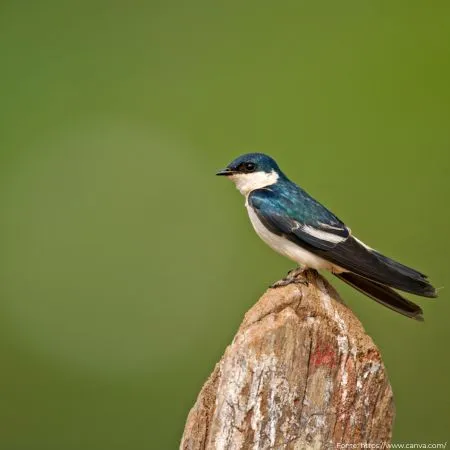
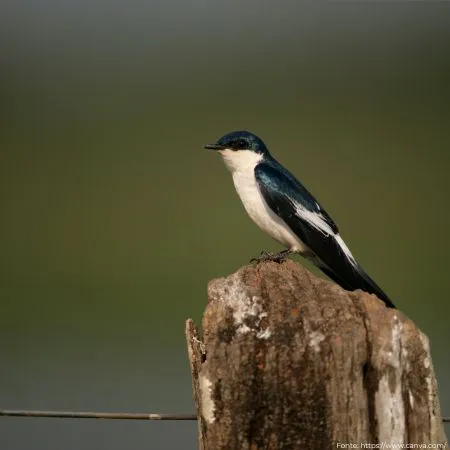
A andorinha-do-rio (Tachycineta albiventer) mede entre 13 e 14 cm de comprimento e pesa de 14 a 17 g. É uma espécie intimamente associada a rios, lagoas e outras áreas alagadas. Sua característica mais marcante é a plumagem superior com brilho metálico em tons de verde-azulado, que se torna mais evidente sob a luz do sol. Possui uma distinta mancha branca nas asas, visível tanto em voo quanto quando está pousada, facilitando sua identificação. As partes inferiores são predominantemente brancas, enquanto a cauda é curta, levemente bifurcada e de coloração escura. O bico e as pernas são pretos. Machos e fêmeas são bastante semelhantes, embora as fêmeas apresentem menor quantidade de branco nas asas. Os indivíduos jovens possuem plumagem menos brilhante, com tons acinzentados nas partes superiores e peito levemente amarelado.
The White-winged Swallow (Tachycineta albiventer) measures 13–14 cm (5–5.5 in) in length and weighs 14–17 g (0.5–0.6 oz). It is closely associated with rivers, lakes, and other freshwater habitats. Its most distinctive feature is the glossy blue-green upperparts, which show a beautiful metallic sheen in bright sunlight. A conspicuous white patch on the wings is visible both in flight and while perched, making the species relatively easy to identify. The underparts are mostly white, while the tail is short, slightly forked, and dark. The bill and legs are black. Males and females look very similar, although females usually have slightly less white on the wings. Juveniles are duller, with grayish upperparts and a faint yellowish wash across the chest.
AlimentaçãoFeeding
Alimenta-se principalmente de insetos capturados em voo, realizando rápidos mergulhos e mudanças de direção sobre a superfície da água. Costuma pousar em galhos parcialmente submersos, raízes expostas e troncos às margens dos rios. Eventualmente pode ser observada próxima de outras espécies de andorinhas, embora normalmente mantenha pequenos grupos da própria espécie.
It feeds mainly on flying insects, catching them in agile aerial pursuits just above the water's surface. It frequently perches on partially submerged branches, exposed roots, and riverside logs. Although it may occasionally be seen near other swallow species, it usually remains in small groups of its own kind.
ReproduçãoReproduction
Constrói o ninho em cavidades de barrancos às margens dos rios, aproveitando também antigos ninhos escavados por martins-pescadores. O interior é revestido com capins secos, penas e outros materiais macios, formando uma pequena tigela onde os ovos são incubados.
It nests in cavities along riverbanks, often reusing abandoned tunnels excavated by kingfishers. The nest is lined with dry grasses, feathers, and other soft materials, forming a shallow cup where the eggs are incubated.
HábitosHabits
A andorinha-do-rio vive quase sempre próxima à água, sendo encontrada em rios, corixos, lagoas e baías do Pantanal. Pode ser observada sozinha, aos pares ou em pequenos grupos familiares. É uma ave extremamente ágil, passando grande parte do dia em voo enquanto caça insetos. Seu voo é rápido e elegante, com mudanças bruscas de direção, sendo uma das espécies mais características dos ambientes aquáticos da região.
The White-winged Swallow is almost always found near water, inhabiting rivers, channels, lagoons, and wetlands throughout the Pantanal. It may be seen alone, in pairs, or in small family groups. An exceptionally agile flier, it spends much of the day hunting insects on the wing. Its fast, graceful flight and sharp turns make it one of the most characteristic birds of the Pantanal's freshwater environments.
ReferênciasReferences
SESC - Guia de Aves do pantanal - disponível em http://www.avespantanal.com.br/paginas/249.htm Acesso em 02 mai. 2009. Brasil 500 Pássaros - disponível em http://webserver.eln.gov.br/Pass500/BIRDS/1eye.htm Acesso em 02 mai. 2009. Turner, A., and C. Rose. 1989. Swallows & Martins: An identification guide and handbook. Houghton Mifflin Company, Boston, Massachusetts. https://www.wikiaves.com.br/wiki/andorinha-do-rio. Acesso em 20/12/2024.